

What does the custom carpet creation process actually involve? Many people think custom carpet simply means choosing a unique pattern. However, a professional project involves much more. Designers and manufacturers must consider the room, measurements, materials, colors, construction, production method, and installation requirements.
As a result, understanding each stage can help you make better decisions before placing an order. It can also reduce design mistakes and prevent unexpected problems during installation.
What Is a Custom Carpet?
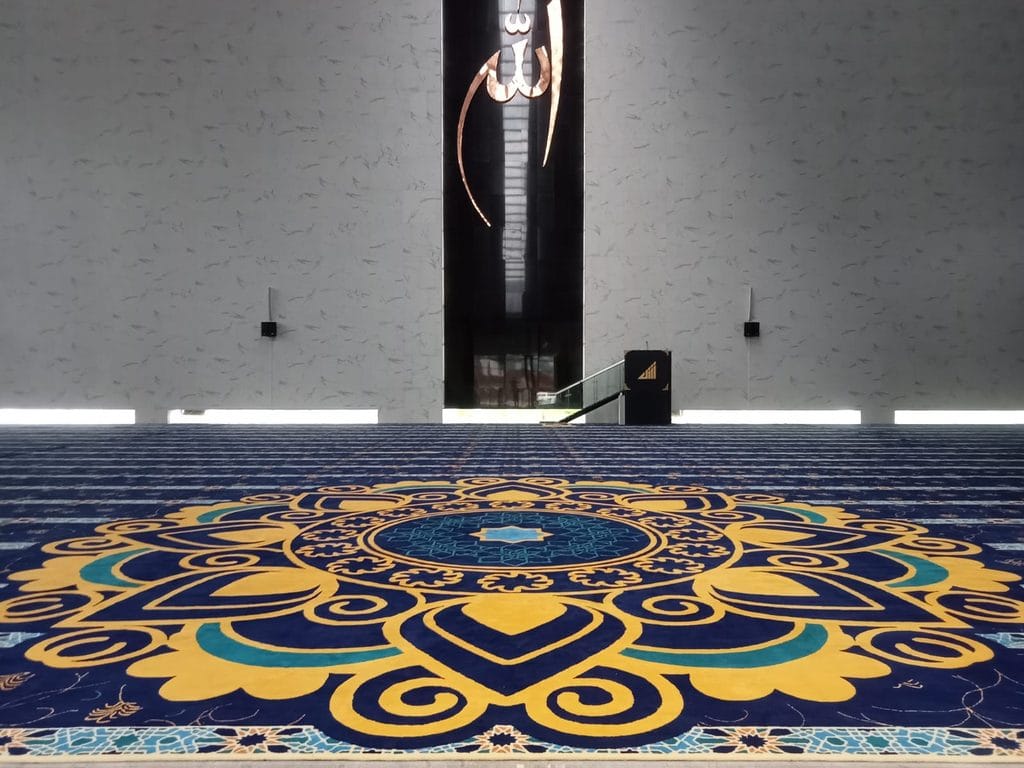
Question: What makes a carpet “custom”?
Answer: A custom carpet follows specific requirements for a particular project. These requirements can include the design, colors, dimensions, materials, patterns, and construction.
Unlike standard carpets, custom carpets give customers more control over the final appearance and specifications. This flexibility makes them useful for offices, hotels, restaurants, mosques, showrooms, and other commercial spaces.
Evidence: Commercial carpet manufacturers offer custom design services that allow clients to develop patterns, colors, visual concepts, and samples before production.
Therefore, custom carpet does not simply focus on appearance. It combines design goals with practical flooring requirements.
How Does the Custom Carpet Creation Process Start?
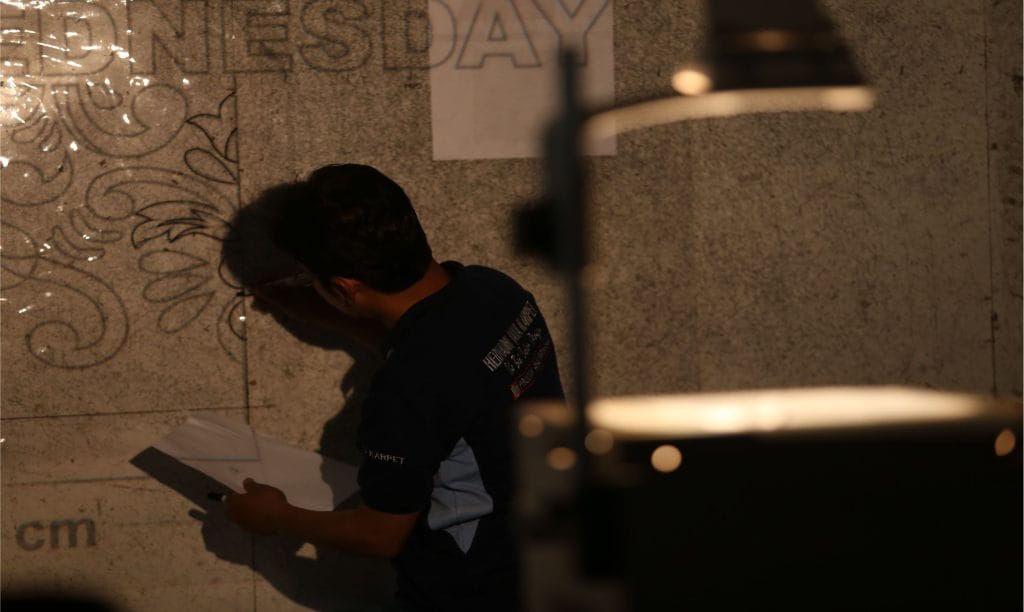
Question: What should customers decide first?
Answer: The process starts with the needs of the space.
First, identify the room's function, size, traffic level, interior style, preferred colors, and budget. Then, determine whether the project needs a carpet roll, carpet tiles, or another carpet format.
For example, a hotel corridor receives different levels of traffic than a private meeting room. Similarly, a mosque may require a different design approach because users need clear visual alignment and comfortable walking surfaces.
Evidence: Commercial flooring projects commonly consider floor plans, measurements, material quantities, design requirements, and installation conditions before production begins.
Consequently, a clear project brief gives the designer a stronger foundation.
How Does a Designer Turn an Idea Into a Carpet Design?
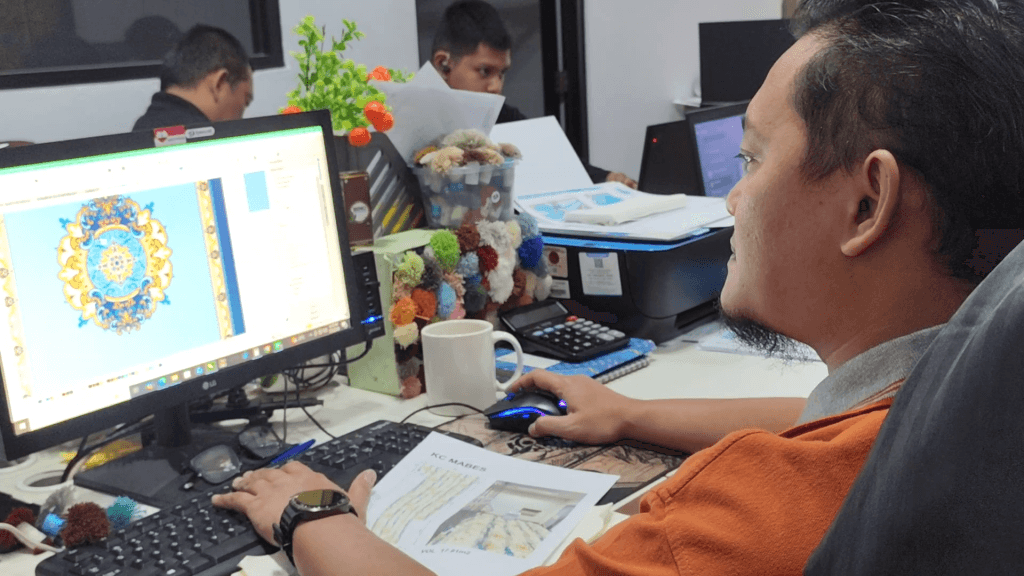
Question: How does a simple idea become an actual carpet pattern?
Answer: Designers transform references, colors, logos, and concepts into a practical carpet pattern.
Customers can provide photographs, sketches, brand guidelines, color references, or existing interior designs. Designers then adjust those elements to suit the carpet's scale and construction.
However, a design that looks attractive on a computer screen may look different on physical carpet. Pattern scale, texture, lighting, and fiber characteristics can change the final appearance.
Evidence: Professional carpet design services often use digital visualization and physical samples to help clients review designs before production.
Therefore, customers should evaluate the design in the context of the actual room rather than relying only on a digital preview.
Why Does Material Selection Matter?
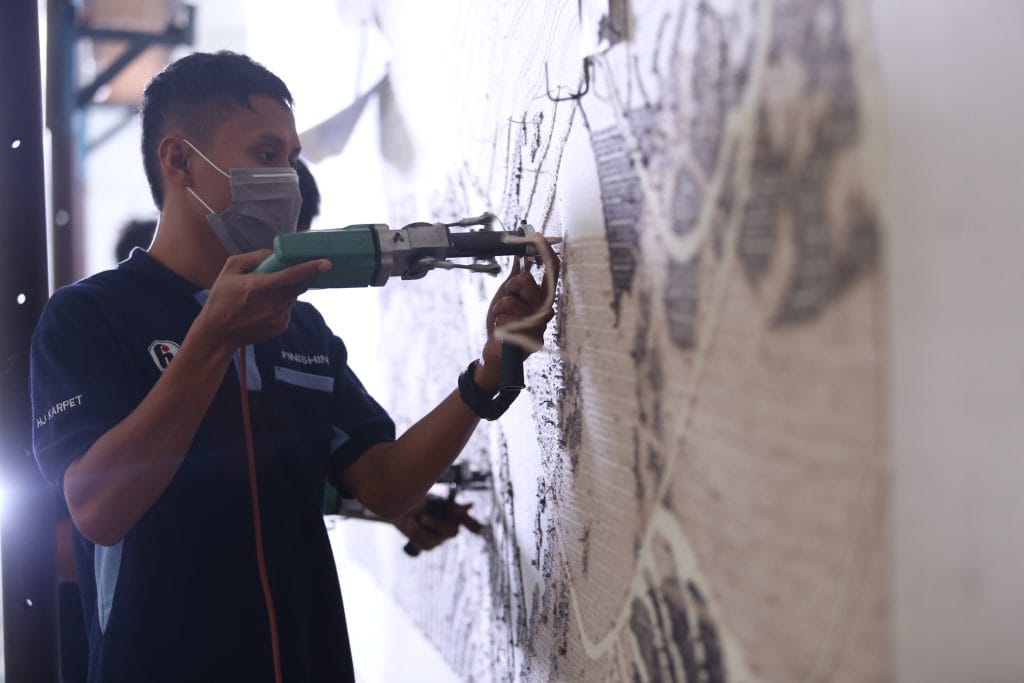
Question: How does material affect a custom carpet?
Answer: Material affects the carpet's appearance, texture, performance, and maintenance requirements.
Manufacturers can use different fiber types and construction methods depending on the project. Therefore, customers should consider more than the initial price.
Think about traffic, cleaning routines, comfort, appearance, and expected use. For example, a busy commercial area may require a different specification from a low-traffic decorative space.
Evidence: Carpet manufacturers identify fiber and construction as important factors in carpet performance.
As a result, the right material should support both the design and the function of the room.
Why Should Customers Approve a Sample?
Question: Why does sampling matter before production?
Answer: A physical sample lets customers inspect the actual color, texture, pattern, and surface before they approve the final product.
Digital screens can display colors differently from physical materials. In addition, lighting inside the installation area can change how colors appear.
A sample also gives the customer an opportunity to compare different materials or design variations.
Therefore, sampling can reduce the risk of approving a design that looks different after production.
What Happens During Carpet Production?
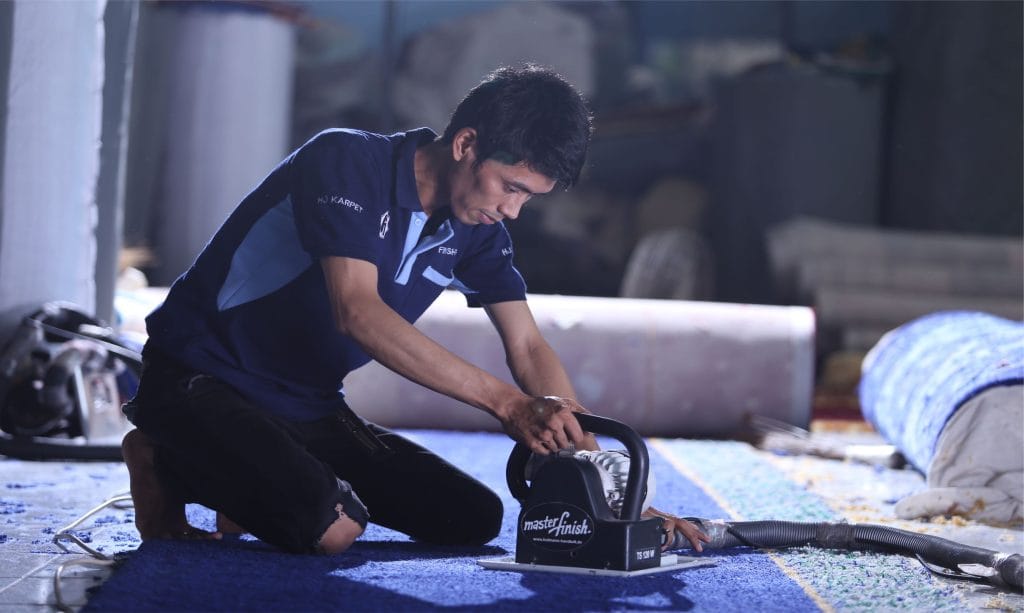
Question: How does the approved design become a finished carpet?
Answer: The manufacturer converts the approved design into a physical product using the selected material and production method.
Depending on the carpet type, production can involve pattern formation, coloring, surface construction, backing application, cutting, and quality inspection.
However, manufacturers do not all use the same production technology. The production method depends on the carpet construction, material, design complexity, and product specifications.
Evidence: Commercial carpet manufacturers use different technologies and construction methods to produce custom patterns and surfaces.
For this reason, customers should ask the manufacturer which production method fits their project.
How Do Manufacturers Check the Carpet Before Installation?
Question: What happens after production finishes?
Answer: The project team checks the carpet before shipping and installation.
They can review dimensions, design consistency, material condition, and other agreed specifications. The installation team can then prepare the site according to the product requirements.
Accurate measurements also matter at this stage. Poor measurements can create material shortages, unnecessary waste, or pattern alignment problems.
Therefore, quality control should cover both the carpet and the project measurements.
How Does Installation Complete the Process?
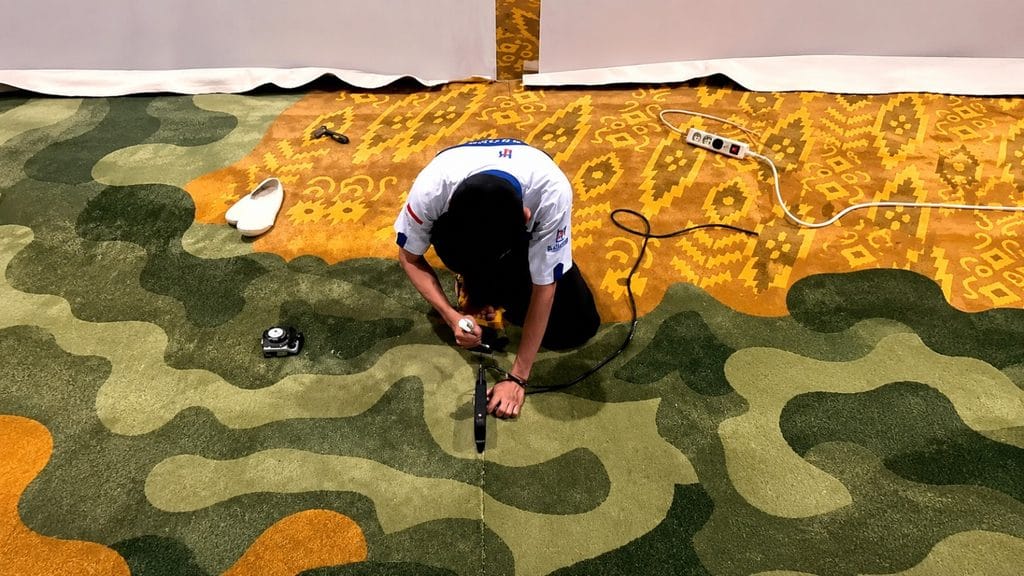
Question: What happens when the carpet reaches the project site?
Answer: Installers prepare the floor, position the carpet, align the design, and secure the material using the appropriate installation method.
First, installers check the subfloor. The surface should meet the manufacturer's requirements for cleanliness, levelness, dryness, and stability.
Next, installers plan the carpet layout. They must consider seams, pattern direction, transitions, and areas that require cutting.
Evidence: Commercial carpet installation guidelines commonly emphasize proper subfloor preparation, product inspection, layout planning, and the correct installation method.
Consequently, even a high-quality custom carpet can produce poor results if the installation team ignores site preparation.
What Affects the Price of Custom Carpet?
Question: Why can custom carpet prices vary between projects?
Answer: Several factors can influence the final cost.
These factors include material, carpet construction, design complexity, dimensions, order quantity, backing, production method, shipping, site preparation, and installation.
For example, a highly detailed pattern may require a more specialized production process. Meanwhile, a large project may require additional planning and installation work.
Therefore, compare quotations based on specifications and included services, not just the price per square meter.
Is Custom Carpet Suitable for Every Space?
Question: Should every project use custom carpet?
Answer: No. Custom carpet makes the most sense when a project needs specific design or technical requirements.
Hotels, offices, restaurants, showrooms, religious facilities, and other commercial spaces may benefit from custom designs when visual identity matters.
However, standard carpet can make more sense for projects with simple requirements or tight budgets.
Therefore, choose custom carpet when its flexibility provides a clear benefit.
What Should You Prepare Before Ordering?
Question: What information should customers prepare?
Answer: Prepare as much project information as possible before contacting a manufacturer.
A useful checklist includes:
- Room measurements
- Floor plans
- Photos of the installation area
- Room function
- Preferred colors
- Design references
- Expected traffic level
- Preferred material
- Carpet type
- Target budget
- Installation requirements
Also, ask for a physical sample before approving production. Then, confirm the final dimensions, design, material, installation method, delivery schedule, and quotation.
What Is the Complete Custom Carpet Process?
Question: What does the complete process look like from beginning to end?
Answer: A typical custom carpet project follows this sequence:
Project requirements → measurement → design concept → material selection → visualization → sample approval → production → quality inspection → delivery → site preparation → installation → final inspection.
Some projects may require additional steps. However, this sequence provides a useful overview of how a custom carpet moves from an idea to a finished installation.
Ultimately, successful custom carpet projects require more than an attractive design. The customer, designer, manufacturer, and installer must coordinate their decisions throughout the process.
By understanding each stage, you can evaluate options more carefully, control project expectations, and choose specifications that match the space.