
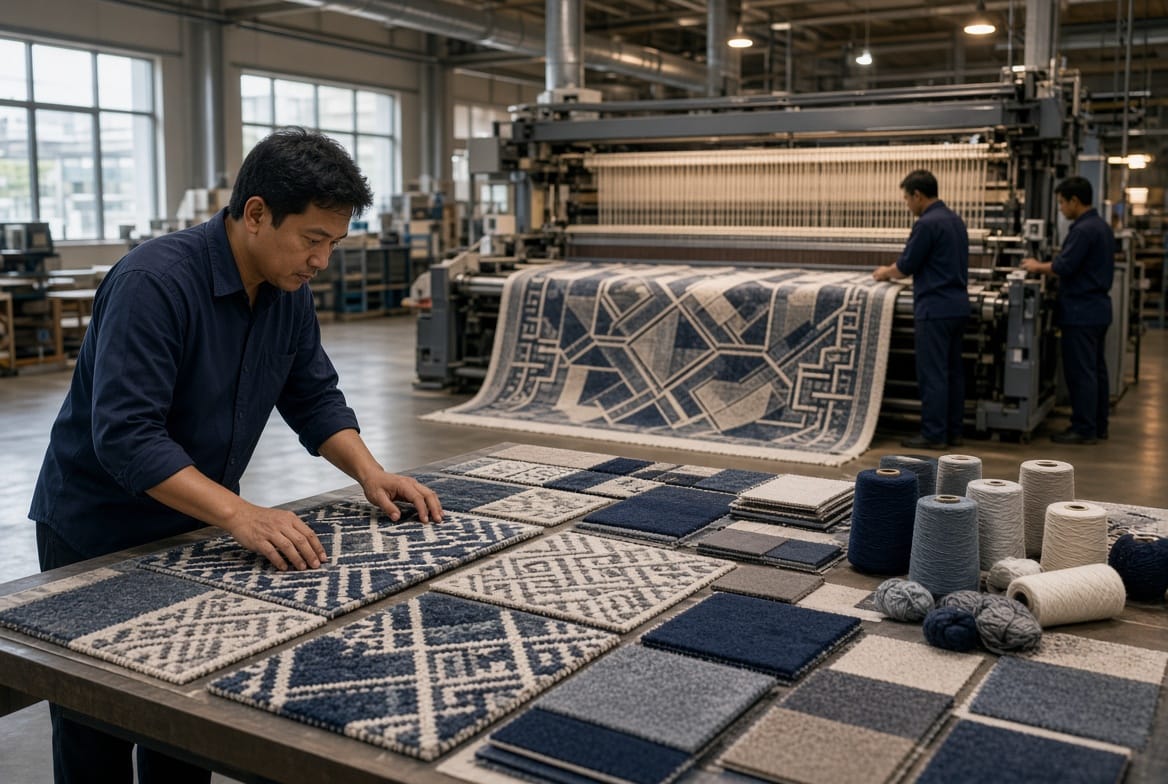

Custom carpets can transform an interior from a standard space into a distinctive environment with its own visual identity. Unlike ready-made carpets, custom carpets can be developed according to specific design concepts, dimensions, colors, patterns, and project requirements.
For hotels, offices, mosques, ballrooms, commercial buildings, and large interior projects, custom carpet manufacturing provides greater flexibility when standard carpet products are not enough.
But how does a custom carpet actually go from an initial idea to a finished product?
1. Understanding the Project Requirements
Every custom carpet project starts with understanding the requirements of the space.
A manufacturer may need information such as floor dimensions, installation areas, intended use, expected foot traffic, preferred colors, design references, and technical specifications.
For large commercial projects, architects, interior designers, contractors, and procurement teams may also provide drawings or detailed project specifications.
Understanding these requirements at the beginning helps ensure that the final carpet is suitable for both the visual concept and practical demands of the project.
2. Developing the Carpet Design
The next stage is design development.
A custom carpet can be created from an existing pattern, an architectural concept, a company identity, or a completely new design.
Design elements may include geometric patterns, organic shapes, gradients, borders, repeated motifs, or specific color combinations.
For corporate environments, custom carpets can also be designed around brand colors. Hotels may use patterns that reflect their interior concept, while religious spaces may require carefully organized patterns for prayer areas.
The goal is to create a design that works naturally with the surrounding architecture.
3. Selecting Materials and Specifications
Material selection is another important part of custom carpet manufacturing.
Different projects require different characteristics. A high-traffic hotel lobby may require a durable carpet, while a luxury interior may place greater emphasis on texture and visual appearance.
Manufacturers may consider factors such as fiber type, pile construction, backing, thickness, density, and maintenance requirements.
The appropriate specifications depend on the intended application, project environment, expected traffic, and budget.
4. Producing the Carpet
After the design and specifications have been approved, the manufacturing process can begin.
Depending on the carpet construction and manufacturing method, production may involve several stages, including material preparation, pattern production, tufting or weaving, backing application, finishing, trimming, and quality inspection.
Large custom projects may require production planning to ensure that different carpet sections maintain consistent colors, patterns, dimensions, and overall appearance.
Quality control is particularly important when producing carpets for large commercial interiors.
5. Quality Control and Inspection
Before shipment, finished carpet products should be inspected according to the project's requirements.
Quality checks can include dimensions, pattern accuracy, color consistency, surface appearance, finishing, backing condition, and packaging.
For large projects, consistency between different carpet sections is essential. A small variation in pattern or color can become more noticeable when multiple carpet pieces are installed across a large floor area.
A structured quality-control process helps reduce potential problems during installation.
6. Packaging and International Shipping
For international projects, manufacturing is only one part of the process.
Custom carpets need to be properly prepared for transportation and storage. Packaging should protect the product from damage, dirt, moisture, and unnecessary deformation during handling and shipping.
International buyers may also require specific documentation, product specifications, packing information, and shipping arrangements.
This makes communication between the manufacturer, buyer, logistics provider, contractor, and project team an important part of international carpet supply.
7. Why Choose Custom Carpet Manufacturing?
Custom carpet manufacturing offers several advantages for projects that require a specific visual identity.
Instead of adapting the interior to an existing carpet design, the carpet can be developed around the architectural concept.
This flexibility is valuable for:
- Hotels and resorts
- Corporate offices
- Mosques and prayer halls
- Ballrooms and event venues
- Shopping and commercial spaces
- Exhibition areas
- Luxury residences
- Large-scale interior projects
Custom carpets can help create a more cohesive relationship between flooring, furniture, walls, lighting, and architectural elements.
8. Working With the Right Carpet Manufacturer
Choosing a manufacturer is an important part of a successful custom carpet project.
International buyers should consider manufacturing capabilities, customization options, material choices, quality-control procedures, production capacity, project experience, communication, packaging, and shipping support.
It is also useful to provide clear technical specifications and design references before production begins.
A manufacturer that understands the complete project process can help reduce misunderstandings between the design concept and the final product.
Conclusion
Custom carpet manufacturing combines design, material selection, production, quality control, and logistics to create flooring specifically for a project's requirements.
From the first design concept to the finished carpet, every stage can influence the final result.
For hotels, offices, mosques, ballrooms, commercial buildings, and other large-scale projects, custom manufacturing provides the flexibility needed to create distinctive and functional interiors.
HJ Karpet provides custom carpet solutions for commercial and interior projects, offering customized designs and specifications based on project requirements. With the right planning and manufacturing process, custom carpets can become an important part of a project's architectural identity.