
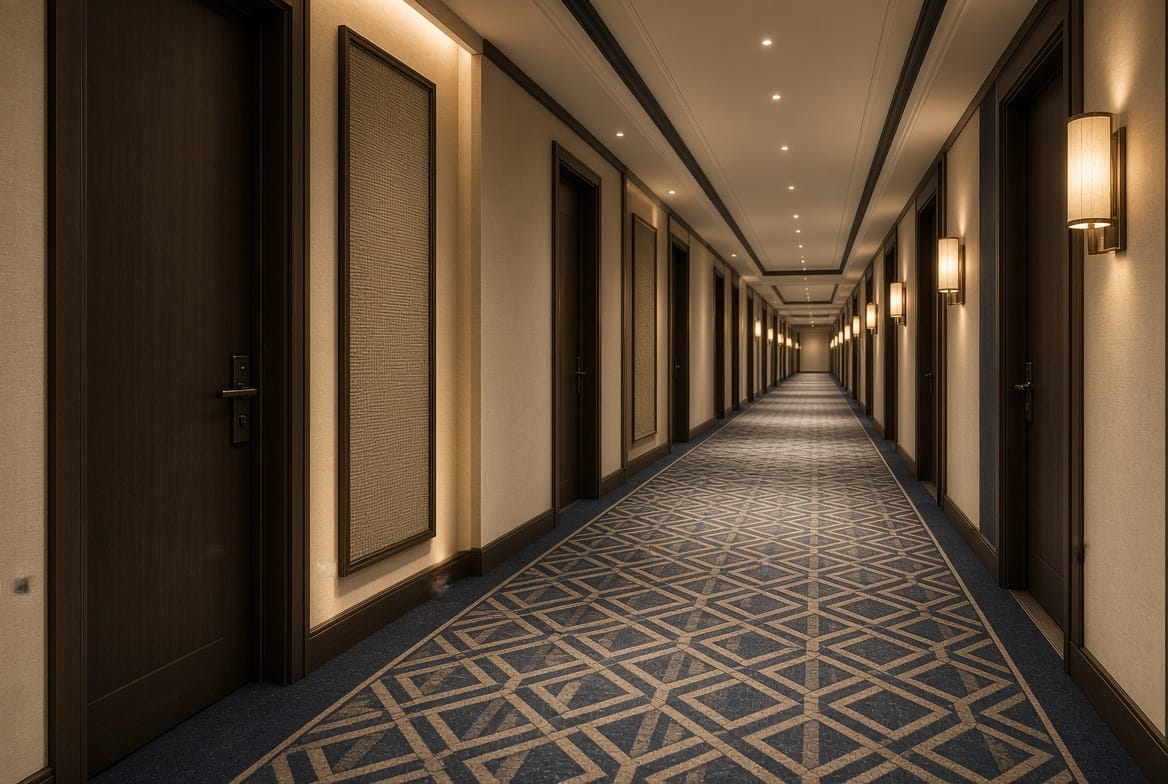

Carpet plays an important role in hotel interiors. It affects the appearance, comfort, atmosphere, and overall experience of guests. From hotel lobbies and corridors to guest rooms, restaurants, ballrooms, and conference areas, the right carpet can complement the architectural concept while supporting everyday use.
Hotel owners, architects, interior designers, and contractors should consider several factors before selecting a carpet. Traffic levels, design, material, maintenance, installation, and project requirements can all influence the final choice.
1. Consider the Location Within the Hotel
Different hotel areas experience different levels of activity.
A hotel lobby can receive guests throughout the day, while corridors experience continuous movement between rooms and common areas. Ballrooms and conference spaces may experience heavy traffic during events.
Guest rooms usually have different requirements because they receive less continuous foot traffic than public areas.
Start the selection process by identifying where the carpet will go. This approach allows the project team to choose specifications that match the actual conditions of each space.
2. Choose a Carpet That Matches Traffic Levels
Traffic plays a major role in hotel carpet selection.
Busy areas require carpet with suitable durability and construction. High-traffic zones such as entrances, lobbies, corridors, and conference facilities need materials that can maintain their appearance under frequent use.
Hotel managers should also consider how easily the carpet can handle routine cleaning and maintenance.
Selecting carpet based on expected traffic can help hotels maintain a consistent interior appearance while managing long-term maintenance requirements.
3. Match the Carpet With the Hotel Interior
A hotel carpet should work together with the surrounding architecture.
Color, pattern, texture, furniture, lighting, wall finishes, and other interior elements all contribute to the final appearance.
Luxury hotels may use sophisticated patterns and detailed textures to create an elegant atmosphere. Modern business hotels may prefer clean geometric designs and neutral colors.
Designers can also use carpet patterns to visually separate different areas within a large hotel.
4. Consider Custom Hotel Carpet
Standard carpet products may not always match a specific hotel concept.
Custom hotel carpet allows designers and project teams to develop patterns, colors, dimensions, and specifications around the interior design.
A custom design can incorporate geometric patterns, brand-inspired colors, decorative elements, or unique visual concepts.
This flexibility can become especially useful for luxury hotels, resorts, boutique properties, ballrooms, and large hospitality projects.
5. Think About Maintenance From the Beginning
Hotels need practical maintenance routines because guests use their facilities every day.
Dust, food, drinks, luggage, and frequent foot traffic can affect carpet appearance over time. A suitable cleaning and maintenance program helps protect the carpet and preserve its appearance.
Before selecting a product, hotel management should understand the recommended cleaning methods and maintenance requirements.
Easy access to professional carpet cleaning can also support long-term carpet maintenance.
Read also Commercial Carpet vs Residential Carpet: What’s the Difference?
6. Pay Attention to Carpet Color
Color affects both appearance and maintenance.
Very light colors can create a bright and sophisticated atmosphere, but they may require more frequent cleaning in busy areas. Darker colors can hide certain types of everyday dirt, while medium tones can provide a balance between appearance and practicality.
Designers should evaluate carpet samples under the actual lighting conditions of the hotel whenever possible.
Natural light, artificial lighting, furniture, and wall colors can all change how a carpet appears.
7. Plan Installation Carefully
Even high-quality carpet needs professional installation.
Large hotel projects often involve multiple rooms, corridors, public areas, and irregular floor plans. Accurate measurements help the project team calculate material requirements and plan carpet layouts.
Installers should also pay attention to seams, transitions, patterns, room dimensions, doors, and other architectural details.
A well-planned installation helps the finished carpet look consistent throughout the hotel.
8. Work With an Experienced Carpet Manufacturer
Hotel projects often require more than a simple product purchase.
The project team may need design development, material recommendations, custom production, quality control, packaging, delivery, and installation support.
For this reason, hotel owners and contractors should evaluate a manufacturer's production capabilities and project experience before placing an order.
A manufacturer with custom carpet capabilities can also help translate an interior design concept into a practical carpet specification.
9. Consider the Project Budget
Budget planning should include more than the initial carpet price.
The project team should consider material costs, custom design, production, shipping, installation, cleaning, and long-term maintenance.
A lower initial price does not necessarily represent the lowest overall project cost.
Instead, compare the specifications and expected performance of different products before making a purchasing decision.
10. Choose Carpet Based on the Complete Project
There is no single hotel carpet that works perfectly for every property.
A luxury resort, business hotel, boutique hotel, and large conference hotel can have completely different flooring requirements.
The right solution depends on the hotel's design concept, traffic levels, location, maintenance program, budget, and technical requirements.
For large or highly customized hospitality projects, early communication between the hotel owner, architect, interior designer, contractor, and carpet manufacturer can make the entire process more efficient.
Conclusion
Choosing hotel carpet requires careful consideration of design, durability, maintenance, traffic, installation, and project requirements.
The right carpet should complement the hotel's architecture while providing a practical flooring solution for guests, staff, and daily operations.
Custom hotel carpet can provide additional flexibility when standard products cannot meet a project's design or technical requirements.
HJ Karpet provides carpet solutions for hospitality, commercial, mosque, office, ballroom, and other interior projects. By understanding the requirements of each project, carpet manufacturers and design teams can develop flooring solutions that balance appearance, comfort, performance, and long-term practicality.