
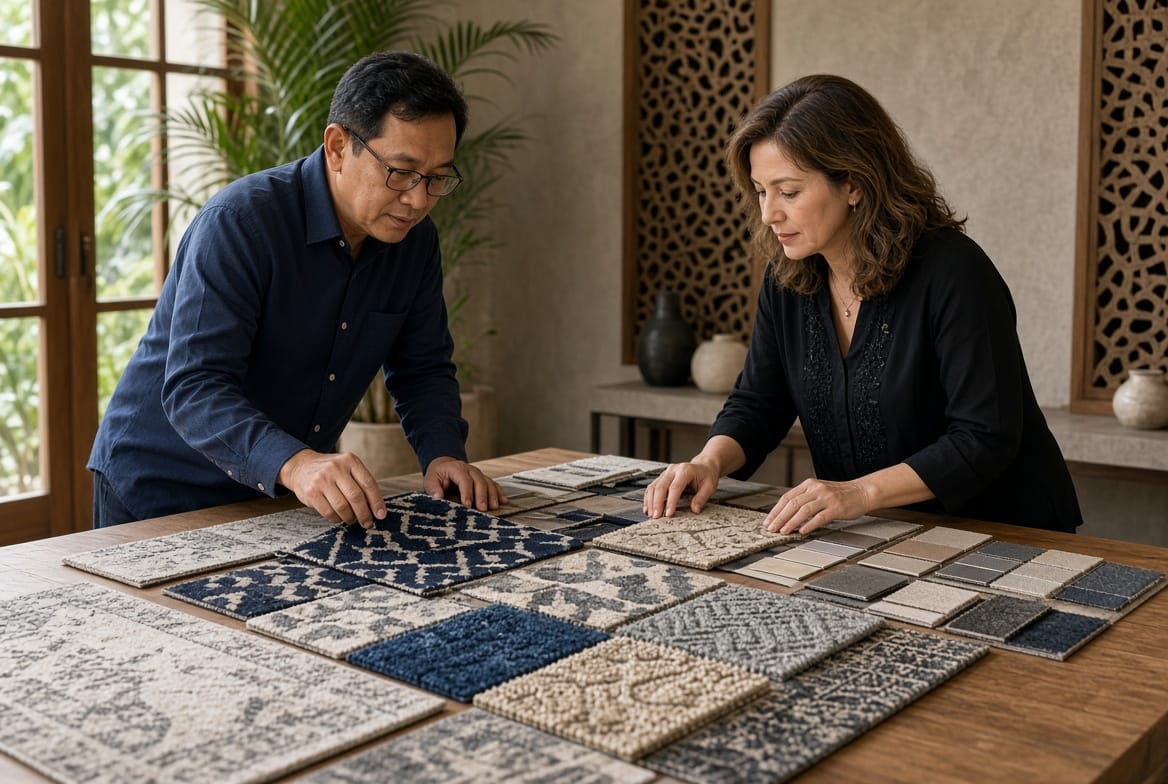

Indonesia has a growing manufacturing sector that serves a wide range of domestic and international industries. For architects, interior designers, contractors, hotel groups, distributors, and procurement teams, sourcing custom carpets from Indonesia can provide flexibility in design, specifications, and production requirements.
However, international carpet sourcing requires more than choosing a product from a catalog. Buyers need to understand specifications, samples, production requirements, quality control, packaging, shipping, and communication before placing an order.
Why Source Custom Carpets from Indonesia?
Custom manufacturing allows buyers to develop carpets according to specific project requirements.
Instead of adapting an interior project to an existing product, buyers can discuss colors, patterns, dimensions, materials, thickness, and other specifications with the manufacturer.
Indonesia also has an established manufacturing ecosystem across many industries. This makes the country an interesting sourcing destination for international buyers looking for products manufactured according to project requirements.
The suitability of a manufacturer still depends on the buyer's specific product requirements, order volume, quality expectations, and logistics needs.
1. Define Your Carpet Specifications
Before contacting a manufacturer, prepare as much information as possible about the project.
Useful specifications can include:
- Carpet dimensions
- Required quantity
- Material
- Thickness
- Color
- Pattern
- Intended application
- Installation method
- Packaging requirements
- Delivery destination
Clear specifications allow manufacturers to evaluate the project more accurately.
For large commercial projects, buyers should also provide floor plans or design references whenever available.
2. Request Samples Before Ordering
Samples provide an important reference before production begins.
A physical sample allows buyers to evaluate the actual color, texture, pattern, thickness, and overall appearance of the carpet.
Digital images can help during the initial design stage, but they may not fully represent the physical product. Lighting, screen settings, and image processing can change how colors appear.
International buyers should therefore consider requesting samples before approving large-scale production.
3. Discuss Custom Design Requirements
Custom carpet manufacturing can support a wide range of design concepts.
Architects and interior designers may provide pattern references, drawings, color codes, brand guidelines, or other visual references.
The manufacturer can then review the design and determine the appropriate production approach.
Early discussion becomes particularly important when the project includes complex patterns, multiple colors, unusual dimensions, or large quantities.
4. Confirm Minimum Order Quantities
Manufacturers may establish different minimum order quantities depending on the product and production method.
International buyers should confirm the MOQ before proceeding with detailed production planning.
Large projects may naturally require higher quantities, while smaller orders may need different production arrangements.
Understanding MOQ early helps buyers avoid unnecessary changes to their sourcing plan.
Read Also Custom Carpet Manufacturing: From Design to Finished Product
5. Review Quality Control Procedures
Quality consistency becomes especially important when ordering large quantities.
Before production begins, buyers should agree on the approved specifications and sample.
Quality checks can cover:
- Color consistency
- Pattern accuracy
- Dimensions
- Carpet surface
- Edge finishing
- Material quality
- Packaging
Clear quality requirements help both parties understand the expected final product.
6. Discuss Packaging for International Shipping
Carpet requires suitable packaging when it travels internationally.
The packaging method should protect the product from damage, dirt, moisture, and excessive handling during transportation.
International buyers should discuss packaging requirements with the manufacturer before production.
The final packaging format may depend on carpet dimensions, quantity, shipping method, destination, and handling requirements.
7. Understand Shipping and Trade Terms
International carpet sourcing also involves logistics.
Buyers and manufacturers should clearly discuss the agreed shipping terms, destination, documentation, production schedule, and transportation arrangements.
Trade terms such as FOB or other agreed Incoterms can define which party handles specific costs and responsibilities.
Because international shipping requirements can vary by destination, buyers should confirm the applicable requirements with their logistics provider and relevant authorities.
8. Calculate the Total Project Cost
The carpet unit price is only one part of the total sourcing cost.
International buyers should consider:
- Product cost
- Customization cost
- Sampling
- Packaging
- Inland transportation
- International freight
- Insurance when applicable
- Import duties and taxes
- Destination handling
- Installation
Calculating the complete landed cost gives buyers a clearer picture of the actual project budget.
9. Choose a Manufacturer That Understands Your Project
The right manufacturing partner should understand both the product and the project's practical requirements.
For commercial projects, buyers may need assistance with design development, sampling, production planning, quality control, packaging, and logistics coordination.
Communication also plays a major role.
A manufacturer that communicates specifications, production stages, and delivery requirements clearly can make international sourcing easier to manage.
Applications for Custom Indonesian Carpets
Custom carpets from Indonesia can serve a variety of interior applications.
Common project categories include:
- Hotels and resorts
- Corporate offices
- Mosques and prayer halls
- Ballrooms
- Conference centers
- Restaurants
- Retail spaces
- Commercial buildings
- Interior design projects
- Hospitality developments
Each application requires different specifications. A hotel corridor, for example, may require different characteristics from a decorative carpet used in a luxury lobby.
Building a Long-Term Manufacturing Partnership
International sourcing does not always have to involve a single transaction.
Distributors, contractors, hotel groups, and interior companies may benefit from developing long-term relationships with manufacturers.
A consistent manufacturing partner can help buyers maintain product specifications across multiple projects and simplify future communication.
Regular collaboration can also make the sampling, production, and quality approval process more familiar for both parties.
Conclusion
Sourcing custom carpets from Indonesia requires careful planning from the initial design concept to final delivery.
International buyers should define product specifications, request samples, confirm production requirements, establish quality standards, discuss packaging, and calculate the complete project cost before placing an order.
A capable carpet manufacturer can support the process by combining production capabilities with clear communication and project-specific customization.
For international architects, interior designers, contractors, distributors, hotel groups, and procurement teams, Indonesia can provide opportunities to source custom carpet solutions for a wide range of commercial and hospitality projects.
HJ Karpet develops custom carpet solutions according to project-specific requirements, supporting buyers who need tailored designs, specifications, and production for interior projects.