
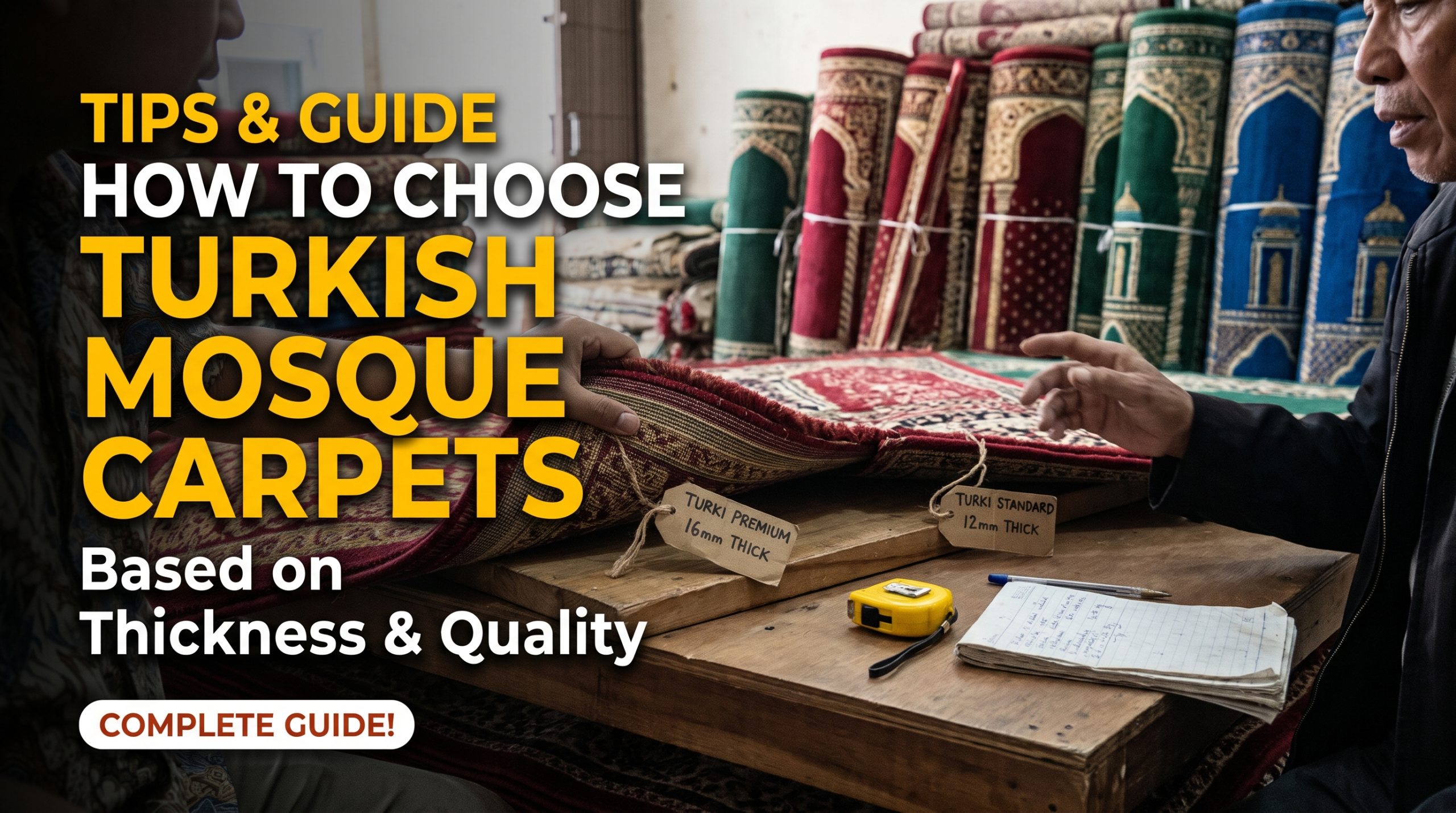

Choosing the right Turkish mosque carpet requires careful consideration of thickness, material, density, and overall construction quality. These factors affect worshippers' comfort, carpet durability, maintenance requirements, and long-term performance.
A high-quality Turkish mosque carpet should provide a comfortable surface for prayer, maintain its shape under regular use, and support the interior design of the mosque. Buyers should evaluate the carpet's technical specifications instead of relying only on appearance or price.
This guide explains how to choose Turkish mosque carpets based on thickness and quality, including the key specifications buyers should check before making a purchase.
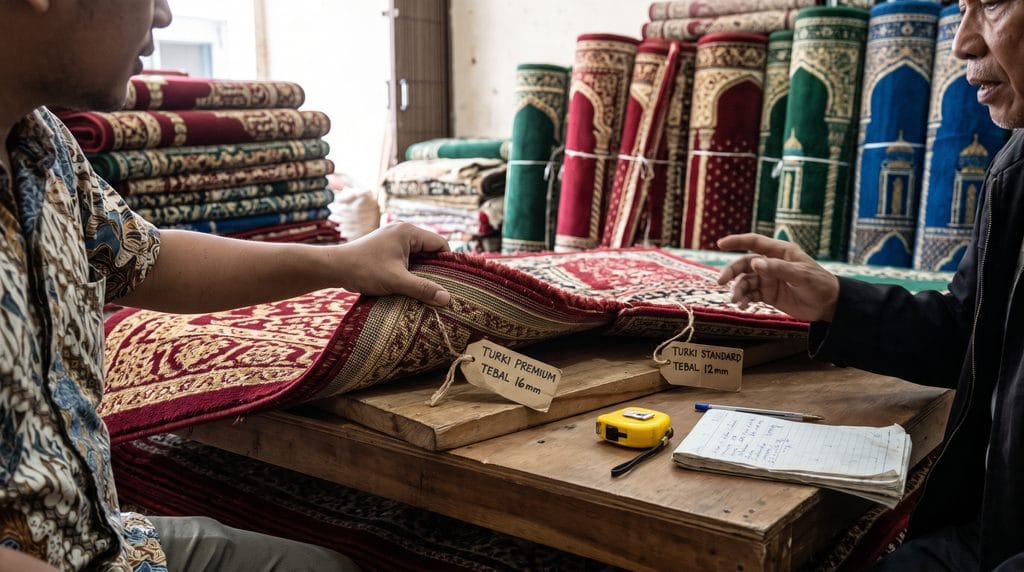
1. Understand the Importance of Turkish Mosque Carpet Thickness
Carpet thickness plays an important role in determining comfort during daily prayers. Worshippers frequently perform sujud, sit between prayer movements, and maintain contact with the carpet for extended periods.
The right thickness helps provide adequate cushioning without making the carpet unnecessarily heavy or difficult to maintain.
How Thick Should a Turkish Mosque Carpet Be?
Turkish mosque carpets come in different thickness specifications. Buyers should consider the intended use, flooring conditions, and expected number of worshippers.
Some important considerations include:
- Thin carpets: Provide a firmer surface and suit areas that require easier maintenance or frequent cleaning.
- Medium-thickness carpets: Offer a balance between cushioning, stability, and everyday practicality.
- Thick carpets: Provide additional cushioning for worshippers who prefer a softer prayer surface.
Buyers should not assume that a thicker carpet always offers better quality. Carpet construction, pile density, backing, and material composition also determine its performance.
Does Carpet Thickness Affect Prayer Comfort?
Yes. Carpet thickness influences how much cushioning the surface provides during prayer.
A carpet with suitable thickness can improve comfort during sujud and sitting positions. However, excessive softness may reduce surface stability and make movement less comfortable for some worshippers.
Mosque management should evaluate thickness alongside carpet firmness and pile construction.
2. Check the Material and Fiber Quality
Material quality determines how well a Turkish mosque carpet handles daily foot traffic, friction, and regular cleaning.
Buyers should identify the fiber composition before comparing different products.
Examine the Carpet Fiber
Common carpet fibers include:
- Polypropylene: Offers practical maintenance characteristics and resistance to moisture.
- Polyamide (Nylon): Provides good abrasion resistance and supports applications with frequent foot traffic.
- Polyester: Offers a soft texture and various color options.
Each material has different characteristics. Buyers should compare the manufacturer's specifications instead of assuming that every Turkish mosque carpet uses the same fiber.
Evaluate the Carpet Pile
Pile refers to the visible fiber surface of a carpet. Its construction influences texture, appearance, and maintenance.
Buyers should examine:
- Pile height and consistency.
- Fiber density and distribution.
- Surface texture and softness.
- Resistance to compression.
- Consistency across the carpet surface.
A consistent pile structure helps create a neat appearance and supports comfortable daily use.
3. Evaluate Carpet Density and Construction
Carpet density represents how closely the fibers occupy the carpet surface. Density influences the carpet's appearance, texture, and resistance to everyday use.
A carpet with higher fiber density may provide better coverage and a fuller surface. However, buyers should also consider fiber quality, pile height, and manufacturing construction.
Check the Carpet Backing
The backing supports the carpet structure and helps maintain dimensional stability.
Before purchasing, examine:
- Backing strength and consistency.
- Adhesion between the backing and carpet structure.
- Resistance to separation.
- Overall flexibility and stability.
Buyers should request technical specifications from suppliers when they need to compare products accurately.
4. Compare Turkish Mosque Carpet Quality Before Buying
Visual appearance alone cannot determine carpet quality. Buyers should evaluate several characteristics before selecting a product.
Inspect the Pattern and Color
Turkish mosque carpets commonly feature traditional Islamic patterns, geometric details, and symmetrical prayer row designs.
Check whether the pattern aligns consistently across the carpet. Examine the color distribution and look for noticeable differences between sections.
Check the Carpet Edges and Finishing
Finishing quality affects the carpet's appearance and installation results.
Inspect the edges, seams, and connection points. Ask the supplier about installation methods and finishing options for large prayer halls.
Request Product Samples
A physical sample helps buyers evaluate characteristics that product photographs cannot fully communicate.
Use a sample to examine:
- Actual thickness.
- Surface softness.
- Fiber density.
- Color accuracy.
- Backing construction.
A sample also helps mosque management compare multiple products before selecting a carpet for the entire prayer area.
5. Consider Mosque Conditions and Daily Usage
Every mosque has different flooring conditions, visitor numbers, and maintenance requirements.
A large mosque with heavy daily foot traffic may require a different carpet specification from a smaller prayer room.
Consider these factors:
- Number of worshippers: Estimate daily usage and expected foot traffic.
- Floor conditions: Check whether the existing floor requires additional cushioning.
- Prayer area dimensions: Measure the prayer hall before selecting carpet rolls or custom sizes.
- Cleaning requirements: Choose materials and construction that support the mosque's maintenance routine.
- Installation requirements: Consider carpet direction, prayer row alignment, and joining methods.
These considerations help buyers select a carpet that matches actual mosque requirements.
6. Ask Suppliers for Complete Product Specifications
Reliable purchasing decisions require clear product information.
Ask suppliers to provide the following details:
| Specification | What to Check |
|---|---|
| Total thickness | Overall carpet thickness in millimeters |
| Pile height | Height of the carpet fiber surface |
| Fiber material | Polypropylene, nylon, polyester, or other materials |
| Pile density | Fiber distribution and construction |
| Backing | Material and structural quality |
| Carpet width | Available roll dimensions |
| Warranty | Product and manufacturing coverage |
| Installation | Cutting, joining, and finishing services |
Do not compare products using thickness alone. Two carpets with identical thickness can deliver different levels of comfort and durability because their materials and construction differ.
Conclusion
Choosing Turkish mosque carpets based on thickness and quality requires more than selecting the thickest or most expensive option. Buyers should evaluate fiber materials, pile construction, carpet density, backing quality, and installation requirements.
The best Turkish mosque carpet combines comfortable cushioning, consistent construction, practical maintenance, and suitable durability for the mosque's daily activities.
Requesting product samples and checking technical specifications can help mosque management make a more informed purchasing decision and select a carpet that meets the needs of worshippers.