
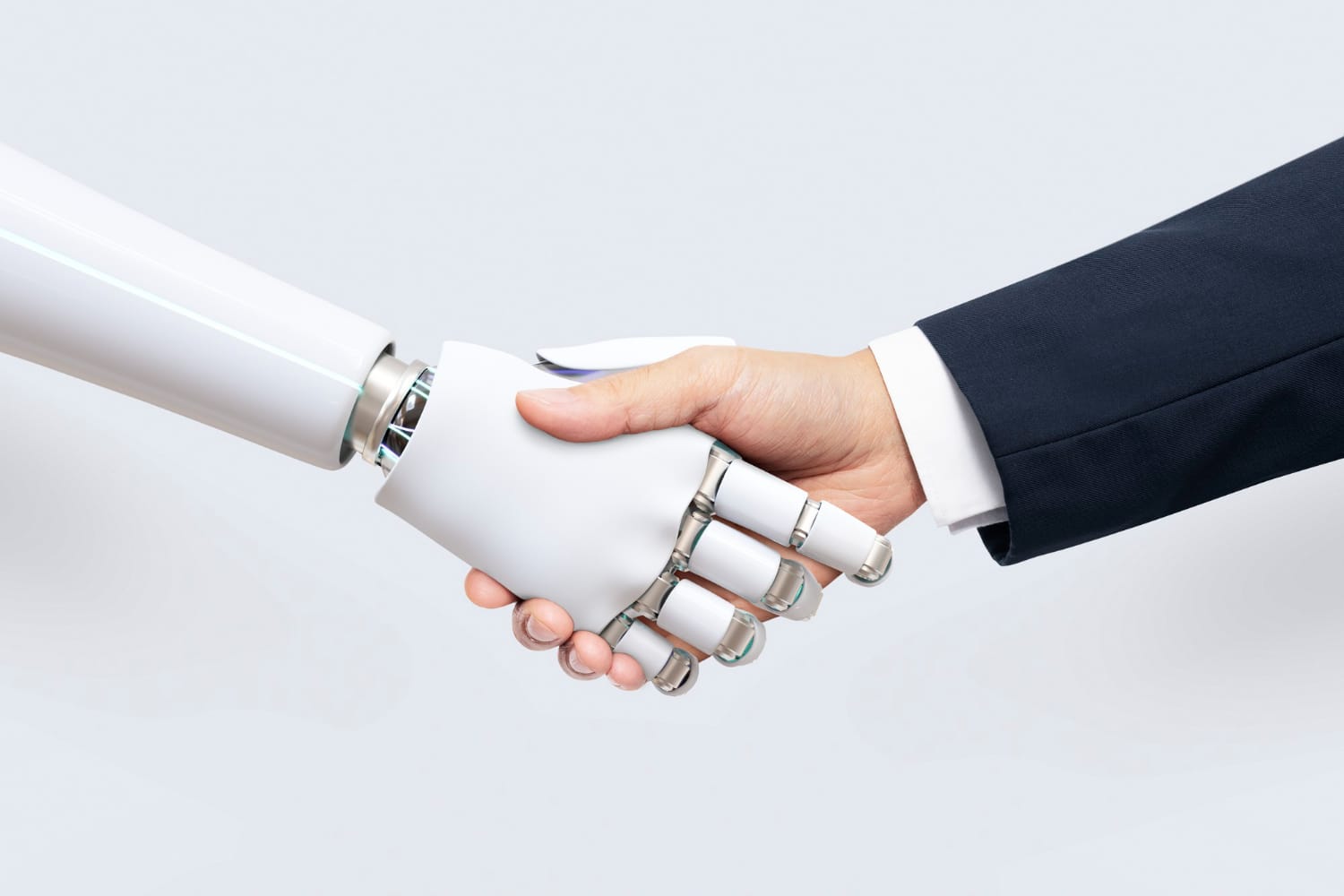

The AI robotics investment story is gaining momentum. Artificial intelligence has already transformed software, search, customer service, and data analysis. Now, companies want to connect that intelligence to machines that can physically interact with the real world.
That shift could create a new technology investment cycle.
AI can generate text, analyze images, and write software.
Robots can use similar intelligence to move, manipulate objects, navigate environments, and perform physical tasks.
Together, these technologies could change manufacturing, logistics, healthcare, construction, and even household services.
The next phase of the AI boom may therefore involve fewer screens and more machines.
AI Gave Robots a New Brain
Traditional robots usually followed strict instructions.
A factory robot could perform the same movement thousands of times, but it struggled when conditions changed.
AI changes that limitation.
Modern AI systems can help robots interpret images, understand instructions, recognize objects, and respond to unfamiliar situations.
This capability makes robots more flexible.
Instead of programming every possible movement, engineers can train systems to understand tasks and adapt to different environments.
That difference could dramatically expand the number of jobs robots can perform.
Why Companies Want Smarter Robots
Businesses have several reasons to invest in robotics.
Labor shortages remain a problem in many industries.
Companies also want to improve productivity, reduce workplace injuries, and operate continuously.
Robots can help address all three challenges.
A warehouse robot can move products without taking breaks. A manufacturing robot can maintain consistent production. A machine can also perform dangerous tasks without exposing workers to unnecessary risks.
Therefore, companies can view robotics as more than a technology upgrade.
They can treat robots as long-term productivity investments.
Manufacturing Remains the First Major Market
Factories already use robots extensively.
However, AI could expand their capabilities.
Instead of performing one fixed task, robots could potentially handle several tasks and adjust to changing production requirements.
That flexibility could benefit manufacturers that produce smaller batches or customized products.
Companies would no longer need to redesign entire robotic systems every time they change production.
As AI improves, flexible automation could become more attractive to smaller manufacturers.
Warehouses Could Change Even Faster
Logistics represents another major opportunity.
Modern warehouses already use automated systems to move goods.
However, many tasks still require humans.
Workers must pick products, sort items, load containers, and handle irregular objects.
AI-powered robots could gradually automate more of those activities.
This could increase warehouse productivity.
It could also change the economics of e-commerce.
Companies could operate larger fulfillment centers with fewer workers while maintaining faster delivery times.
Humanoid Robots Get Most of the Attention
Humanoid robots attract enormous public attention.
Companies want machines that can walk, use tools, manipulate objects, and operate in environments designed for humans.
The appeal makes sense.
Businesses have already built factories, warehouses, and workplaces around human movement.
A humanoid robot could potentially use the same doors, stairs, tools, and workstations.
However, the technology remains challenging.
Walking reliably, handling delicate objects, managing batteries, and operating safely around humans require sophisticated systems.
Therefore, humanoid robots may take longer to scale than headlines suggest.
The Economics Matter More Than the Demonstrations
A robot can perform an impressive demonstration without becoming a profitable product.
Businesses need something different.
They need machines that can perform useful work at a competitive cost.
That means companies must consider:
- Purchase price
- Maintenance costs
- Energy consumption
- Downtime
- Training costs
- Safety requirements
- Productivity gains
- Replacement cycles
If a robot costs too much to operate, businesses will not deploy it at scale.
Therefore, the robotics industry must eventually prove its economics.
AI Could Make Robots More Affordable
Software represents an important part of that equation.
Traditional robots often require extensive programming.
AI could reduce the amount of specialized programming required.
A company might eventually train a robot to perform a task using demonstrations or natural-language instructions.
That could lower deployment costs.
As a result, smaller businesses could gain access to automation that previously required large engineering teams.
This development could expand the AI powered robotics market far beyond major manufacturers.
The Supply Chain Could Become Huge
Robotics requires more than robot manufacturers.
Companies also need motors, sensors, batteries, processors, cameras, actuators, precision components, and specialized software.
This creates opportunities across the supply chain.
Chip manufacturers can supply processors.
Battery companies can provide power systems.
Industrial manufacturers can produce mechanical components.
Software companies can develop robot-control systems.
Consequently, robotics could create an ecosystem similar to the smartphone and semiconductor industries.
China Could Play a Major Role
China already dominates large parts of global manufacturing and industrial robotics supply chains.
That position could provide an advantage as AI-powered machines become more important.
Chinese companies can potentially combine robotics development with established manufacturing capabilities.
Meanwhile, other economies are also investing heavily.
The United States has major AI and technology companies.
Japan has decades of robotics expertise.
South Korea has advanced manufacturing capabilities.
Europe also maintains strong industrial automation industries.
Therefore, robotics could become another area of intense global competition.
Labor Markets Will Feel the Impact
Robotics will change employment.
However, the effect will not necessarily involve simple job destruction.
Some tasks may disappear.
Other jobs may emerge around robot installation, maintenance, supervision, software development, safety, and system integration.
Companies may also redesign jobs instead of eliminating them.
For example, one worker could supervise several automated machines instead of manually performing every task.
Therefore, the biggest change may involve how people work with machines rather than humans simply disappearing from factories.
Robots Could Push Productivity Higher
This represents the biggest economic opportunity.
If robots allow companies to produce more with fewer resources, productivity can increase.
Higher productivity can support economic growth.
It can also help companies manage labor shortages without reducing output.
In the long term, robotics could therefore complement the productivity gains that AI promises to deliver through software.
AI handles information.
Robots handle physical work.
Together, they could cover a much larger portion of the economy.
The Capital Spending Cycle Could Get Bigger
The AI boom already requires massive infrastructure spending.
Robotics could extend that cycle.
Companies may need to invest in factories, warehouses, charging systems, software, sensors, and automated equipment.
That means investors should watch capital expenditure across both technology and industrial companies.
If businesses start deploying robots at scale, robotics could become a major source of equipment demand.
This could benefit manufacturers far beyond the companies that sell robots themselves.
The Biggest Barrier May Be Reliability
Robots need to work consistently.
A human worker can adapt to unexpected situations naturally.
A robot must interpret those situations correctly.
One failure can stop a production line or create a safety problem.
Therefore, reliability will determine how quickly businesses adopt advanced robotics.
Companies will not replace proven systems simply because a new robot looks impressive.
They will adopt new machines when those machines deliver measurable improvements.
What Comes After the AI Boom?
AI has spent the past few years becoming increasingly capable.
The next question involves physical deployment.
What happens when AI moves from computers into factories, warehouses, hospitals, farms, and construction sites?
Robotics provides one possible answer.
The technology could turn AI from a digital productivity tool into a physical workforce multiplier.
That would represent a much larger economic transformation.
Final Thoughts
The AI robotics investment cycle could become one of the next major chapters in the technology economy.
AI has already changed how businesses process information.
Robotics could change how businesses perform physical work.
However, investors should avoid confusing impressive demonstrations with commercial success.
The winners will need to build machines that work reliably, operate safely, and generate clear economic returns.
If companies solve those problems, robotics could move from specialized industrial equipment into a much broader market.
AI gave machines a new kind of intelligence. The next economic opportunity may come from teaching those machines how to work.