


Turkish mosque carpets and local mosque carpets offer different options in design, material, construction, availability, and customization. The best choice depends on the mosque's requirements, budget, prayer area, maintenance capacity, and preferred visual style. Buyers should compare actual product specifications rather than assume that imported carpets always offer better quality than locally produced alternatives.
What Is the Difference Between Turkish and Local Mosque Carpets?
The main difference lies in their product origins, available designs, manufacturing specifications, and supply options. Turkish mosque carpets come from manufacturers or suppliers in Turkey. Local mosque carpets come from domestic manufacturers or suppliers.
The country of origin alone does not determine quality. Manufacturers can produce carpets with different fibers, pile structures, densities, backing materials, and thicknesses. Buyers need to evaluate each product individually.
What Are the Characteristics of Turkish Mosque Carpets?
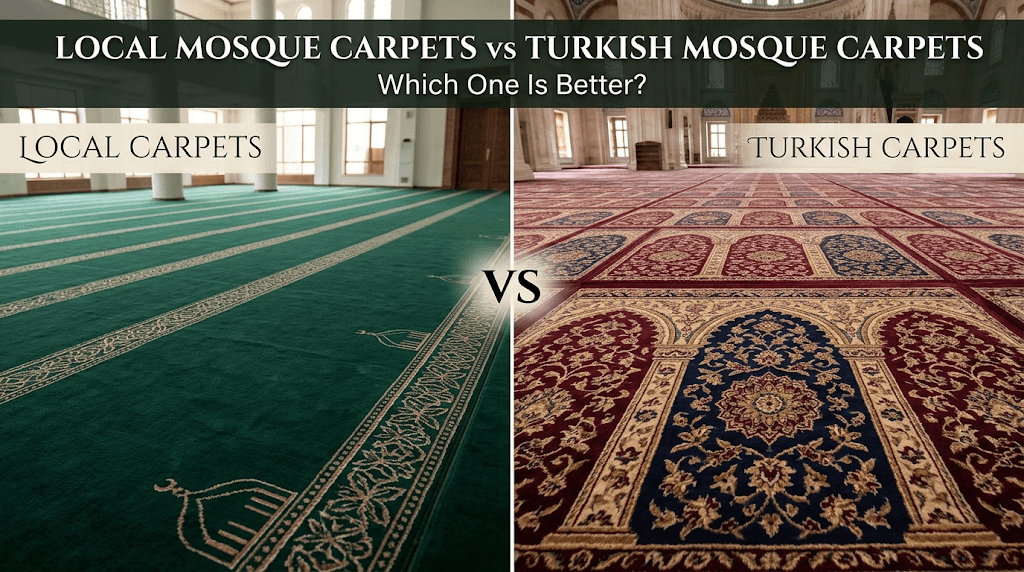
Turkish mosque carpets often attract buyers who prefer traditional Islamic patterns, detailed ornamentation, and established mosque carpet designs.
1. Design and Patterns
Many Turkish-style mosque carpets feature repeating floral ornaments, geometric compositions, and decorative prayer-row patterns. These designs can create a consistent visual arrangement across a prayer hall.
However, Turkish carpets do not follow one universal design. Each manufacturer may offer different patterns, color combinations, and product collections.
2. Material and Construction
Turkish mosque carpets come in different material and construction options. Buyers should check the fiber composition, pile structure, backing, density, and total thickness before purchasing.
The word "Turkish" identifies the product's origin or market category. It does not guarantee a particular fiber type or construction standard.
3. Design Availability
Buyers may find various traditional patterns and color combinations through Turkish carpet suppliers. Product availability depends on the manufacturer, distributor, and current stock.
Import requirements and delivery schedules can also affect procurement planning.
What Are the Characteristics of Local Mosque Carpets?
Local mosque carpets offer domestic supply options and may provide greater flexibility when buyers need specific dimensions, product configurations, or direct coordination with local suppliers.
1. Design and Customization
Local manufacturers can offer different patterns, colors, and design approaches. Some suppliers also provide custom services for mosques that need specific dimensions, prayer-row arrangements, or visual concepts.
Buyers should confirm which customization options the manufacturer can actually produce.
2. Material and Construction
Local mosque carpets also come in different material grades and construction types. Buyers should compare technical specifications instead of judging products only by their local origin.
A local product can meet demanding requirements when its manufacturer uses suitable materials and construction methods.
3. Supply and Project Coordination
Domestic suppliers can make communication, measurement, delivery coordination, and after-sales support easier for projects within Indonesia. Actual service quality still depends on the supplier's capacity and service coverage.
Which Carpet Offers Better Quality: Turkish or Local?
Neither category automatically offers better quality. Buyers should compare the specifications of individual products.
Several factors help determine carpet quality:
- Fiber composition: identifies the material used in the carpet.
- Pile structure: affects surface texture, comfort, and maintenance.
- Density: helps buyers evaluate the carpet's construction.
- Total thickness: provides information about the product's overall structure.
- Backing: affects the carpet's support and installation requirements.
- Abrasion resistance: helps assess suitability for areas with frequent foot traffic.
- Maintenance requirements: determine the cleaning methods and ongoing care.
Buyers can request product specification sheets, material samples, and maintenance instructions. These documents provide more reliable evidence than general claims about imported or local products.
What Should Mosque Managers Consider Before Choosing?
Mosque managers should evaluate the prayer area's actual requirements before selecting a carpet.
1. Mosque Size and Layout
Measure the prayer area, columns, entrances, corners, and other architectural features. Accurate measurements help buyers estimate material requirements and plan carpet joints.
2. Prayer-Row Alignment
The carpet pattern should support the mosque's prayer-row arrangement. Buyers need to check the direction, spacing, and continuity of the lines before approving a design.
3. Daily Usage
Mosques with frequent congregational activities need carpets that can handle regular foot traffic. Buyers should prioritize suitable construction, stable installation, and manageable maintenance.
4. Budget and Supply
Compare the total project cost, including transportation, installation, maintenance, and potential replacement. Imported products may involve additional logistics, while local products may offer easier coordination. Buyers should request actual quotations instead of assuming one category always costs less.
Is Turkish Mosque Carpet Better for Traditional Mosque Designs?
Turkish mosque carpets can suit traditional interiors because many available collections feature ornamental patterns and established prayer-row compositions.
Local mosque carpets can also support traditional designs. Buyers can select products with suitable motifs, colors, and layouts from domestic suppliers.
The final result depends on the actual design, material, and production quality rather than the product's origin alone.
When Should You Choose Turkish or Local Mosque Carpets?
Choose Turkish mosque carpets when a specific imported design, product specification, or collection matches the mosque's requirements.
Choose local mosque carpets when domestic availability, project coordination, custom dimensions, or supplier communication better match the project's needs.
Buyers should compare samples and technical specifications before making the final decision. This approach helps mosque managers avoid decisions based only on product labels or assumptions about country of origin.
Conclusion
Turkish and local mosque carpets offer different design collections, supply options, and customization possibilities. Neither category guarantees superior quality by origin alone.
Mosque managers should compare fiber composition, construction, density, thickness, backing, maintenance requirements, and project costs. Accurate measurements and product documentation help buyers select a carpet that matches the mosque's layout, daily activities, and long-term maintenance needs.