
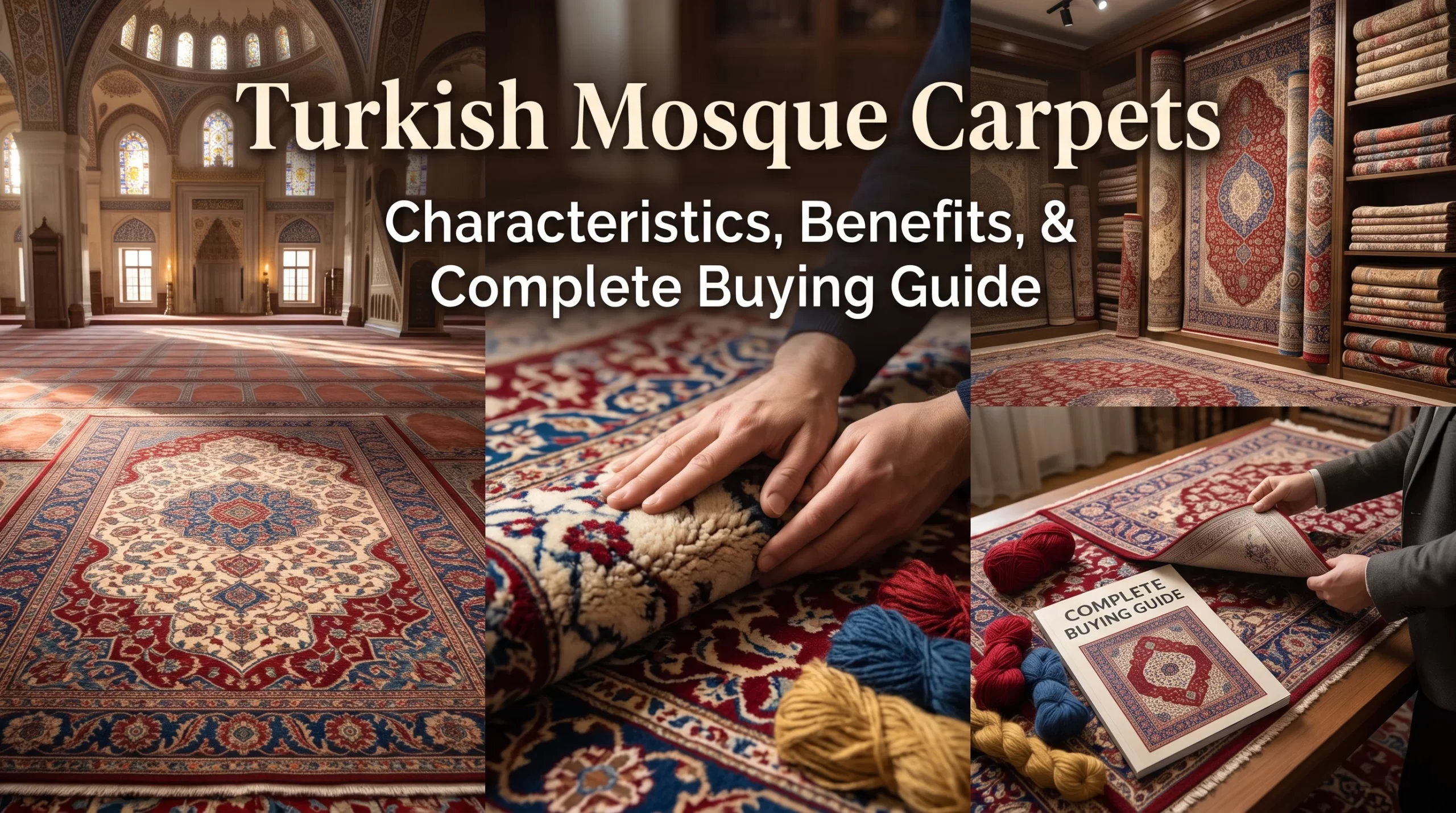

Turkish mosque carpets offer a distinctive combination of decorative patterns, structured designs, and practical features for prayer spaces. Mosque committees, architects, contractors, and mosque managers often consider Turkish carpets when they need a coordinated interior appearance and comfortable prayer surfaces. Buyers should evaluate the carpet's material, construction, pile density, thickness, and maintenance requirements before choosing a product.
What Are Turkish Mosque Carpets?
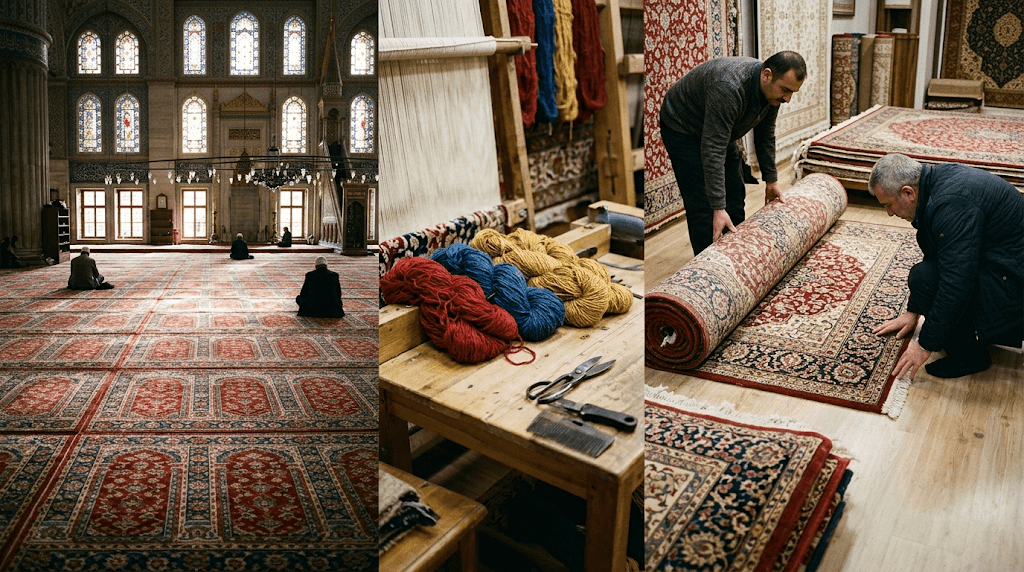
Turkish mosque carpets are prayer carpets associated with carpet designs and manufacturing traditions from Turkey. Many designs feature repeating geometric patterns, floral ornaments, central motifs, and coordinated colors. Manufacturers also produce mosque carpets with row patterns that help worshippers maintain organized prayer lines.
The term Turkish carpet does not guarantee a specific material, construction method, or quality level. Products can differ by manufacturer, collection, fiber composition, and production specifications. Buyers should check the product details rather than rely on the country or style label alone.
What Are the Main Characteristics of Turkish Mosque Carpets?
1. Distinctive Patterns and Decorative Designs
Turkish mosque carpets often feature repeating motifs, floral elements, and geometric compositions. Some designs use a central decorative field, while others create continuous patterns across the carpet surface.
These patterns can support a coordinated interior concept. Mosque managers should consider the scale of the motifs and the room dimensions to avoid visual clutter.
2. Coordinated Prayer Rows
Many mosque carpet designs include repeated row patterns. These patterns can help worshippers identify prayer positions and maintain alignment during congregational prayer.
Buyers should check the distance between row lines, the direction of the pattern, and the room layout. A design that looks attractive in a sample may not align correctly with the mosque's dimensions or prayer orientation.
3. Different Materials and Constructions
Manufacturers can use different fibers and construction methods to produce Turkish-style mosque carpets. The material affects texture, maintenance, moisture response, and resistance to wear.
Buyers should request information about fiber composition, pile height, total thickness, density, backing, and cleaning instructions. These specifications provide a more reliable basis for comparison than appearance alone.
4. Various Colors and Thickness Options
Mosque carpets come in different color combinations and thickness options. Green, red, blue, and other shades can support different interior concepts.
Thickness affects the feel of the carpet, but a thicker product does not automatically provide better durability. Buyers should evaluate thickness alongside density, construction, and intended use.
What Are the Benefits of Turkish Mosque Carpets?
Turkish mosque carpets can offer several benefits when buyers select products that match their requirements.
- Coordinated interior design: Repeating patterns and coordinated colors can create a consistent visual appearance.
- Prayer row guidance: Row motifs can help worshippers organize their positions.
- Design variety: Buyers can compare different patterns, colors, and decorative styles.
- Comfort: Suitable carpet construction can provide a more comfortable surface for standing, sitting, and prostration.
- Project flexibility: Buyers can explore different dimensions and layouts according to the available product range and customization options.
These benefits depend on the actual product specifications. Buyers should not assume that every Turkish mosque carpet offers identical performance.
How Do You Choose the Right Turkish Mosque Carpet?
1. Measure the Mosque Area
Start by measuring the prayer hall, including its length, width, columns, corners, and other obstacles. Accurate measurements help determine the required carpet quantity and reduce installation problems.
The team should also identify the direction of the qibla. This information helps the supplier plan the prayer row orientation.
2. Check the Material and Construction
Ask the supplier for the fiber composition, construction details, thickness, and backing information. Compare these specifications with the mosque's expected traffic and maintenance capacity.
A mosque with frequent daily use needs a carpet that can handle repeated foot traffic and regular cleaning.
3. Evaluate the Pattern and Row Alignment
Check the motif scale, row spacing, and pattern direction. The design should support the mosque's layout without creating awkward cuts around columns or wall edges.
Request a layout proposal when the room has an irregular shape or several structural obstacles.
4. Consider Maintenance Requirements
Mosque carpets collect dust, sand, and other particles from footwear and daily activities. Buyers should understand the recommended vacuuming schedule, stain treatment, and deep-cleaning methods.
The maintenance team should follow the manufacturer's instructions to protect the carpet fibers and backing.
5. Compare Samples and Product Specifications
Request physical samples when possible. Samples allow the team to inspect the color, texture, pile structure, and overall feel.
Compare products using written specifications. A product comparison should include material, construction, dimensions, thickness, maintenance, and warranty terms.
Are Turkish Mosque Carpets Better Than Local Mosque Carpets?
Turkish mosque carpets are not automatically better than locally produced alternatives. The right choice depends on the product's material, construction, design, performance, availability, and project requirements.
Turkish products may appeal to buyers who prefer particular patterns or design styles. Local products may offer practical advantages in supply, customization, communication, or installation coordination.
Buyers should compare actual specifications rather than judge quality solely by country of origin.
Can You Customize Turkish Mosque Carpets?
Customization depends on the manufacturer, product collection, and production method. Some suppliers offer options for dimensions, colors, patterns, or special layouts. Other products follow fixed specifications.
Buyers should confirm customization availability before ordering. They should also request a final design layout and written specifications to reduce misunderstandings during production and installation.
Conclusion
Turkish mosque carpets offer a range of decorative patterns, coordinated prayer row designs, colors, and construction options. Buyers should evaluate material, thickness, density, dimensions, maintenance, and installation requirements before selecting a product.
The best choice depends on the mosque's layout, daily activity, design preferences, and maintenance capacity. A careful comparison of product samples and technical specifications helps mosque managers make a more informed purchasing decision.