
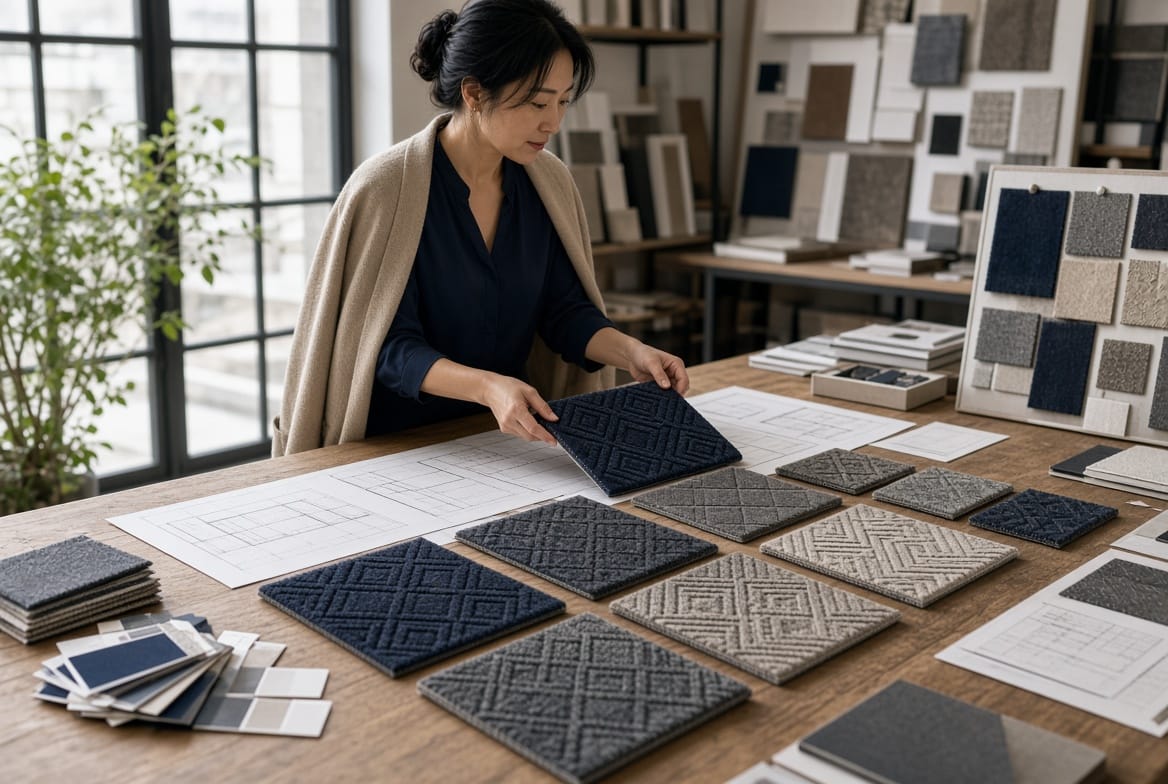

Commercial interiors need more than attractive furniture and impressive architecture. Every surface contributes to the experience of a space, including the floor.
Custom carpet for commercial interiors gives architects, interior designers, contractors, and property owners greater freedom when developing a project. Instead of adapting the interior to an existing carpet design, the project team can develop a carpet that follows the concept of the space.
Hotels, offices, restaurants, retail spaces, ballrooms, and other commercial environments can benefit from this approach.
Why Custom Carpet Matters in Commercial Design
Commercial spaces often have specific design requirements.
A hotel may need a distinctive pattern for its lobby and corridors. An office may want carpet colors that complement its corporate identity. Meanwhile, a ballroom may require a large-scale pattern that works with its architectural proportions.
Standard carpet products cannot always meet these requirements.
Custom manufacturing gives designers more control over color, pattern, dimensions, texture, and overall appearance.
Design Starts With the Interior Concept
A successful carpet design should work together with the surrounding architecture.
Before developing the carpet, designers should consider the furniture, wall finishes, lighting, ceiling design, and overall color palette.
The carpet can then support the visual direction of the project instead of competing with other elements.
Minimalist interiors may benefit from subtle geometric patterns. Luxury hospitality spaces can use more decorative designs, while corporate offices often work well with clean and understated patterns.
Choosing the Right Material
Material selection affects the appearance, comfort, durability, and maintenance requirements of commercial carpet.
Different spaces experience different levels of traffic. A busy hotel lobby requires different considerations from a private executive office.
The project team should evaluate:
- Expected foot traffic
- Comfort requirements
- Cleaning frequency
- Visual appearance
- Durability
- Project budget
- Maintenance requirements
The right material should balance design goals with practical performance.
Color Development for Custom Carpet
Color plays an important role in commercial interiors.
A designer may select colors based on an architectural concept, corporate identity, furniture palette, or brand guidelines.
Physical samples provide a more reliable way to evaluate the final appearance. Digital screens can display colors differently depending on the device and settings.
Lighting also changes how a carpet looks. A color may appear different under natural daylight, warm lighting, or cool commercial lighting.
For this reason, project teams should review physical samples before approving large-scale production.
Custom Patterns and Visual Identity
Patterns can give a commercial space its own identity.
Geometric designs can create a contemporary appearance. Organic patterns can produce a softer atmosphere, while traditional motifs may suit hospitality or cultural environments.
Designers can also create patterns that subtly reflect a company's branding without making the carpet look like an advertisement.
This approach allows the floor to contribute to the overall identity of the interior.
Custom Carpet for Hotels
Hotels represent one of the strongest applications for custom carpet.
Guests interact with different carpeted areas throughout their stay. Lobby floors, corridors, restaurants, meeting rooms, and ballrooms all require different design approaches.
A coordinated carpet collection can connect these spaces while giving each area its own character.
Hotel projects also require careful attention to maintenance because high guest traffic can quickly affect the appearance of flooring.
Read Also Carpet Tiles vs Broadloom Carpet: Which One Fits Your Commercial Project?
Custom Carpet for Offices
Modern offices increasingly use interior design to influence workplace experience.
Carpet can help create visual zones between workstations, meeting areas, collaboration spaces, and lounges.
A company can also incorporate its brand colors into the carpet design while maintaining a professional appearance.
For large offices, designers can combine several patterns or color variations to create a cohesive interior without making every room look identical.
Custom Carpet for Ballrooms and Event Spaces
Ballrooms require designs that work across large floor areas.
A small pattern may lose its visual impact in a large room, while an oversized pattern can dominate the interior.
Designers should therefore consider the viewing distance, room dimensions, furniture arrangement, lighting, and event setup before finalizing the pattern.
Custom carpet allows the team to develop a design specifically for the proportions of the venue.
Installation Planning
Good design alone does not guarantee a successful carpet project.
The installation plan also needs careful attention.
Accurate measurements help determine material requirements. The team should also consider doors, columns, stairs, furniture zones, transitions, and other architectural elements.
For complex commercial projects, early coordination between the designer, contractor, installer, and carpet manufacturer can reduce installation problems.
Maintenance and Long-Term Performance
Commercial carpet needs a practical maintenance strategy.
Regular vacuuming can remove surface dust and debris. Professional cleaning can address deeper dirt and stains.
The maintenance schedule should reflect the level of activity in the building.
A busy hotel lobby may need more frequent cleaning than a low-traffic office area.
Proper maintenance helps preserve the carpet's appearance and extends its useful life.
What to Ask a Custom Carpet Manufacturer
Before starting a commercial carpet project, buyers should discuss several points with the manufacturer.
Ask about available materials, customization options, sample development, production capacity, quality control, packaging, delivery, and installation support.
International buyers should also discuss shipping requirements and project timelines early in the process.
Clear communication helps both sides understand the project's technical and commercial requirements.
Why Indonesia Can Be a Strategic Manufacturing Partner
Indonesia has a growing manufacturing sector and a strong textile and interior-products industry.
For international buyers, working with an Indonesian carpet manufacturer can provide access to custom production while supporting projects across hospitality, commercial, religious, and interior applications.
Project requirements may vary significantly, so buyers should evaluate each manufacturer's capabilities based on the specific product and project.
Conclusion
Custom carpet for commercial interiors gives architects, designers, contractors, and property owners greater control over both aesthetics and functionality.
The process starts with the interior concept and continues through material selection, color development, pattern design, sampling, production, installation, and maintenance planning.
A well-designed carpet should not simply cover the floor. It should support the architecture, improve the experience of the space, and meet the practical demands of everyday use.
With the right design approach and manufacturing partner, custom carpet can become an important part of a successful commercial interior project.