
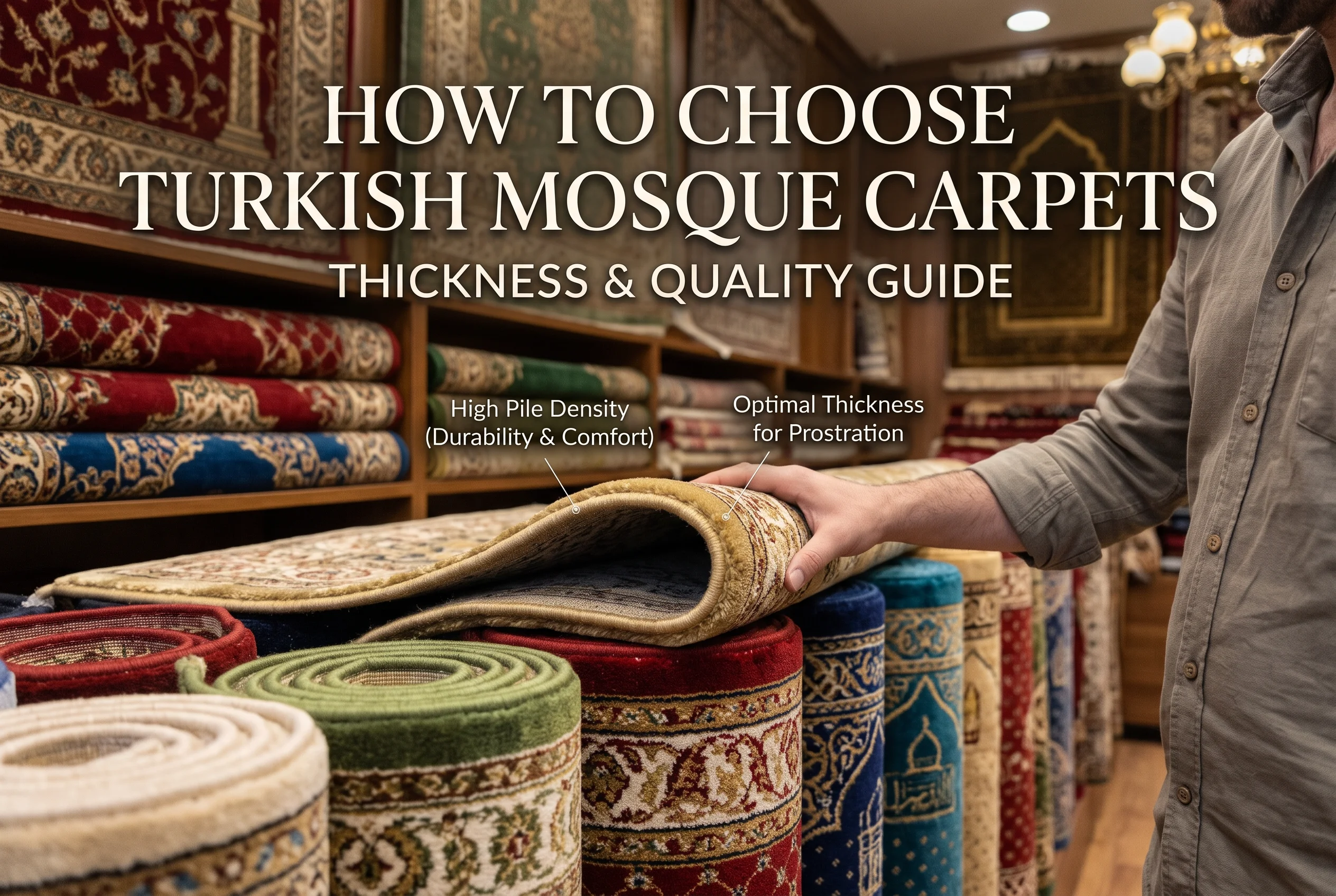

Choosing the right Turkish mosque carpet requires more than checking its appearance or thickness. Mosque administrators need to consider fiber material, carpet density, pile height, construction quality, and the daily activities inside the prayer area. Each factor affects comfort, durability, cleaning requirements, and long-term performance.
A thick carpet does not automatically offer better quality. Buyers should examine the carpet's construction and match its specifications with the mosque's needs.
1. What Carpet Thickness Works Best for a Mosque?
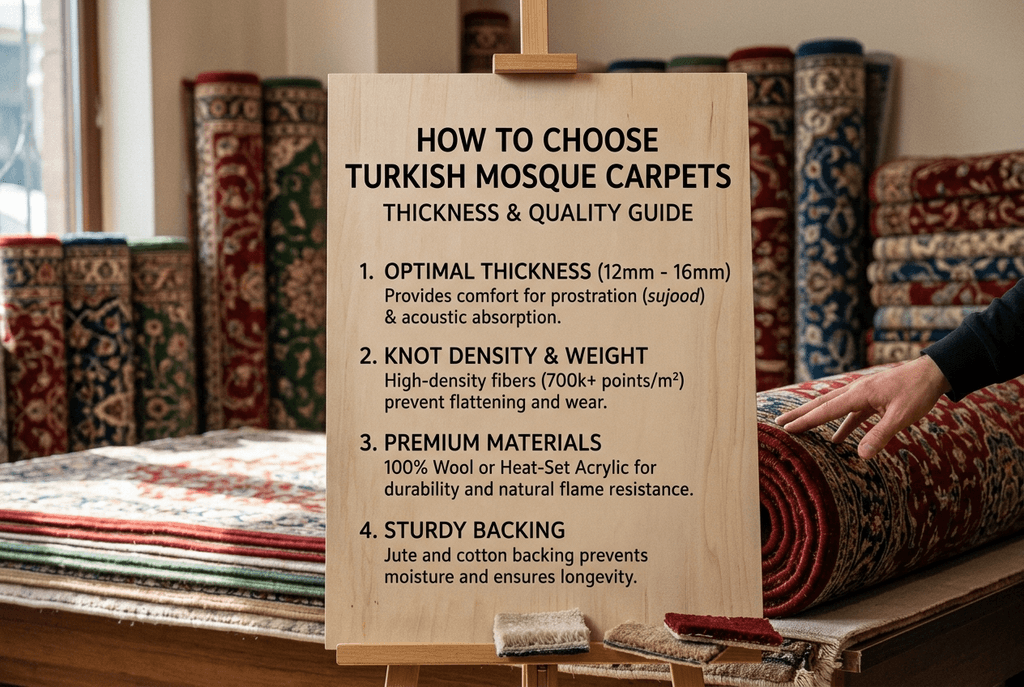
The ideal carpet thickness depends on the mosque's flooring, prayer activities, and maintenance requirements. A suitable carpet should provide comfortable support during sujud and sitting without creating problems for doors, floor levels, or carpet edges.
Understand Total Thickness and Pile Height
Carpet specifications may include two different measurements:
- Total thickness: The overall measurement from the carpet backing to the top of its pile.
- Pile height: The height of the visible fiber surface above the backing.
These measurements describe different parts of the carpet. Buyers should check both values instead of relying on a general thickness description.
Does a Thicker Carpet Always Offer Better Comfort?
No. Carpet thickness alone cannot determine comfort or durability. Fiber type, pile construction, density, and backing also influence performance.
A carpet with a thick but loose pile may compress under repeated pressure. A carpet with a more compact construction may provide better surface stability. Mosque administrators should test actual samples before selecting a product.
2. Which Materials Should Buyers Consider?
Turkish mosque carpets may use different synthetic or natural fibers. Buyers should check the manufacturer's specifications because the country of origin does not guarantee a particular fiber composition.
Polypropylene
Polypropylene offers a practical option for many carpet applications. Manufacturers commonly use this synthetic fiber because it resists moisture absorption and supports straightforward routine maintenance.
Buyers should still examine fiber density, construction, and cleaning instructions before choosing a polypropylene mosque carpet.
Nylon
Nylon offers good resilience and resistance to repeated compression. This characteristic makes nylon relevant for areas with frequent foot traffic.
Its actual performance depends on yarn quality, pile construction, and manufacturing specifications.
Polyester
Polyester can provide a soft surface and support a range of carpet designs. Buyers should compare its construction and wear characteristics with the expected mosque traffic.
Wool
Wool provides a natural fiber option with a distinct texture and thermal characteristics. Buyers should check its maintenance requirements and suitability for the mosque's cleaning routine.
3. How Can Buyers Evaluate Turkish Mosque Carpet Quality?
Buyers should inspect the carpet's physical construction instead of judging quality through photographs alone.
Check Fiber Density and Pile Construction
Carpet density describes how closely the fibers occupy the carpet surface. A well-constructed pile can help the carpet maintain its appearance under regular use.
Ask the supplier for relevant specifications, including pile density and yarn details. Do not assume that a higher total thickness automatically means greater density.
Examine the Backing
The backing supports the carpet structure and helps maintain its shape. Inspect the backing for consistent construction, secure attachment, and visible manufacturing defects.
Check the manufacturer's installation recommendations. The correct installation method can help prevent movement, uneven edges, and premature damage.
Inspect the Surface and Finishing
Ask for a physical sample and examine these details:
- Fiber consistency across the surface.
- Secure pile attachment.
- Uniform color and pattern.
- Clean edges and finishing.
- Consistent thickness across the sample.
- No visible gaps, loose fibers, or manufacturing defects.
A supplier should provide clear product specifications and explain the differences between available models.
4. How Should Mosque Administrators Match Carpet Specifications With Room Conditions?
The mosque's layout and daily activity should guide the selection process.
Main Prayer Hall
The main prayer hall needs a comfortable surface that supports regular prayer activities. Administrators should prioritize stable construction, consistent pile density, and suitable thickness.
Entrance and High-Traffic Areas
Entrances receive repeated foot traffic and may collect dust or moisture from footwear. A compact, practical carpet construction can help these areas handle frequent use.
Administrators should also consider separate entrance mats and a regular cleaning schedule.
Smaller Prayer Rooms
Smaller prayer rooms may have different space and maintenance requirements. Buyers should measure the available floor area and check door clearance before ordering carpet rolls or custom-cut sections.
5. What Questions Should Buyers Ask Before Purchasing?
A clear specification helps buyers compare products accurately. Ask the supplier these questions:
- What fiber material does the carpet use?
- What are the total thickness and pile height?
- Does the manufacturer provide pile density or construction details?
- What type of backing does the product use?
- What cleaning methods does the manufacturer recommend?
- Does the supplier provide physical samples?
- What installation method suits the product?
- Does the supplier offer product documentation or a warranty?
Request written specifications for the exact carpet model. General product descriptions may not represent every model in the supplier's collection.
6. Is Turkish Mosque Carpet Always Better Than Local Carpet?
No. The country of origin alone cannot establish carpet quality. Turkish and locally manufactured carpets can offer different materials, constructions, designs, and specifications.
Buyers should compare products through measurable characteristics such as fiber composition, pile height, density, backing, finishing, and maintenance requirements.
A well-matched local carpet can serve a mosque better than an unsuitable imported product. The right decision depends on the actual specifications and the mosque's operational needs.
Conclusion
Choosing a Turkish mosque carpet requires a careful assessment of thickness, fiber material, pile density, backing, and finishing. Buyers should not use thickness as the only quality indicator.
Request product specifications, inspect physical samples, and compare each model with the mosque's floor conditions and daily traffic. This approach helps mosque administrators select a carpet that supports prayer comfort, practical maintenance, and long-term use.