
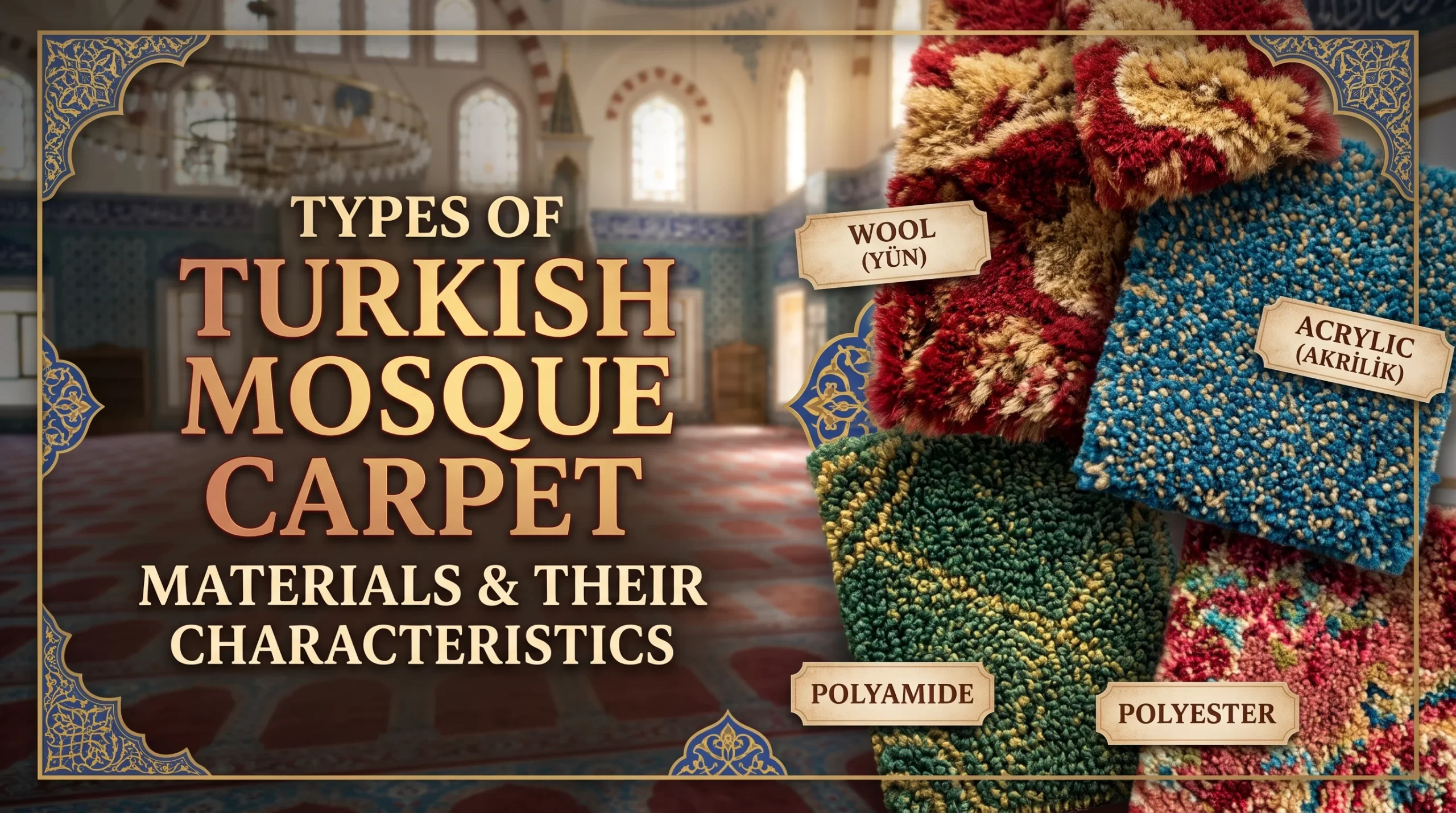

Turkish mosque carpets come in different material compositions, each with distinct characteristics in texture, durability, comfort, and maintenance. Mosque administrators should understand these differences before selecting a carpet for prayer halls, corridors, and other communal spaces. The country of origin alone does not determine carpet quality. Fiber composition, carpet construction, pile density, backing, and manufacturing standards also influence product performance.Types of Turkish Mosque Carpet Materials and Their Characteristics.
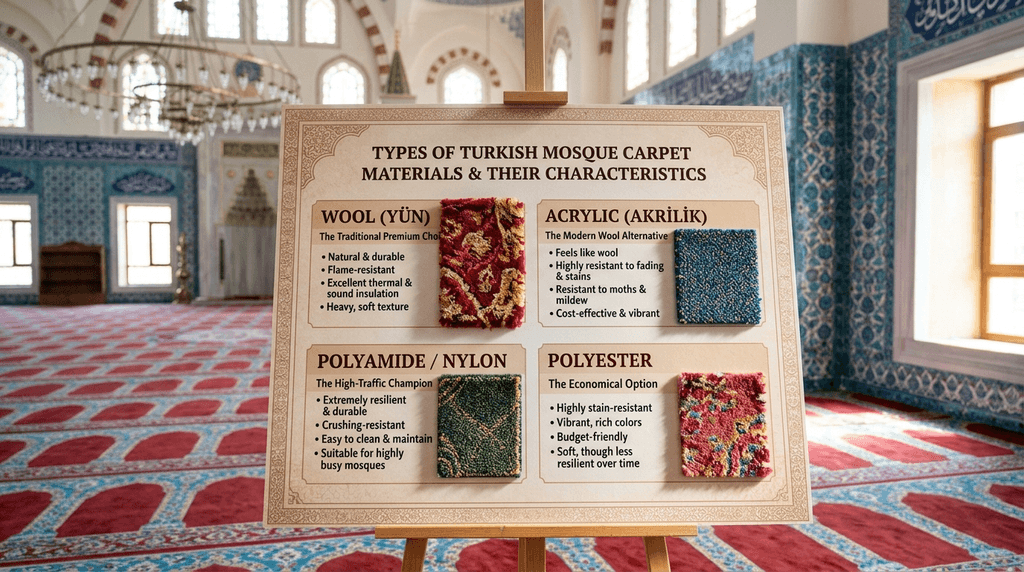
What Materials Do Turkish Mosque Carpets Use?
Turkish mosque carpets may use synthetic fibers, natural fibers, or blended compositions. Manufacturers select materials according to the product series, intended application, design, and production requirements.
Common carpet fibers include:
- Polypropylene (PP)
- Nylon (polyamide)
- Polyester
- Wool
- Blended fibers
Not every Turkish carpet uses all these materials. Buyers should check the manufacturer's technical specifications to confirm the actual fiber composition of each product.
What Are the Characteristics of Each Carpet Material?
1. Polypropylene (PP)
Polypropylene is a synthetic fiber that manufacturers commonly use in carpet production. Its low moisture absorption gives it useful characteristics for managing certain types of spills and moisture exposure.
Key characteristics include:
- Low moisture absorption.
- Relatively easy routine cleaning.
- Lightweight fiber structure.
- Different textures and colors depending on manufacturing methods.
Polypropylene does not always recover its original shape as effectively as nylon after repeated compression. Mosque administrators should examine pile construction and density when considering this material for areas with frequent foot traffic.
2. Nylon (Polyamide)
Nylon offers strong abrasion resistance and good resilience. These characteristics make it a relevant option for spaces that receive frequent use, including mosque entrances, main prayer halls, and corridors.
Its main characteristics include:
- Good resistance to repeated friction.
- Strong fiber resilience.
- Ability to maintain surface appearance under suitable conditions.
- Compatibility with different carpet constructions.
Nylon carpets still require regular cleaning. Dust, sand, and accumulated dirt can affect their appearance and surface condition over time.
3. Polyester
Polyester provides manufacturers with flexibility in color and surface appearance. Buyers can find different textures and visual styles depending on the fiber construction.
Its characteristics include:
- Broad color and design options.
- Soft surface feel in many product constructions.
- Different levels of stain resistance depending on the fiber and treatment.
- Suitability for specific interior applications.
Polyester does not automatically provide the same resilience as nylon in high-traffic environments. Buyers should review the manufacturer's performance specifications before selecting polyester for heavily used prayer areas.
4. Wool
Wool is a natural fiber with a distinctive texture and comfortable surface feel. Some carpet manufacturers use wool in products that emphasize natural materials and interior comfort.
Its characteristics include:
- Natural fiber composition.
- Soft and warm surface feel.
- Distinctive texture.
- Specific cleaning and maintenance requirements.
Wool requires appropriate care. Mosque administrators should follow the manufacturer's cleaning recommendations and consider the risks of moisture, staining, and frequent use.
5. Blended Fibers
Some manufacturers combine different fibers to achieve particular product characteristics. A blended carpet may combine the properties of synthetic and natural materials.
The actual performance depends on the fiber ratio, construction, and manufacturing process. Buyers should not assume that every blended carpet offers the same benefits.
Ask the supplier for the exact composition and technical details before comparing products.
Does Carpet Material Determine Durability?
Material influences durability, but it does not determine performance on its own. Carpet construction, pile density, pile height, backing, installation, and maintenance also affect how a carpet performs.
For example, two carpets that use polypropylene may have different levels of resilience because their manufacturers use different constructions. A dense surface may also behave differently from a loose construction under repeated foot traffic.
Buyers should examine several technical details:
- Fiber composition and percentage.
- Pile density and pile height.
- Total carpet thickness.
- Backing material and construction.
- Abrasion or performance test results, when available.
- Manufacturer recommendations for intended use.
These details provide a more reliable basis for comparison than material names alone.
Which Turkish Carpet Material Is Suitable for a Mosque?
The right material depends on the mosque's operational needs.
Main Prayer Hall
The main prayer hall needs a carpet that supports regular prayer activities. Administrators should prioritize surface comfort, stable construction, easy maintenance, and suitability for frequent use.
Mosque Entrance and Corridors
Entrances and corridors experience frequent movement and collect dirt from footwear. Administrators should prioritize abrasion resistance, practical cleaning requirements, and stable installation.
Smaller Prayer Rooms
Smaller prayer rooms may offer more flexibility in material selection. Administrators can compare comfort, appearance, maintenance, and available product specifications.
No single fiber works best for every mosque. The administrator should match the product's technical characteristics with the room's actual conditions.
How Can Buyers Verify the Material Quality of Turkish Mosque Carpets?
Buyers should request technical documents and physical samples before placing large orders. A product catalog may show colors and patterns, but it may not provide enough information about fiber composition or construction.
Use this inspection checklist:
- Check the fiber composition on the product specification sheet.
- Examine the carpet surface and inspect its consistency.
- Compare pile density and pile height.
- Inspect the backing and edge finishing.
- Ask about cleaning methods and maintenance requirements.
- Request available performance test documents.
- Confirm the product's recommended application with the supplier.
A physical sample helps buyers assess texture, color, and surface feel. Technical documents help verify details that visual inspection cannot establish.
Conclusion
Turkish mosque carpets can use polypropylene, nylon, polyester, wool, or blended fibers. Each material offers different characteristics in moisture absorption, resilience, texture, appearance, and maintenance.
Mosque administrators should not select a carpet based only on its country of origin or material name. They should compare fiber composition, construction, density, backing, and manufacturer recommendations. This approach helps them choose a carpet that matches the mosque's activities and maintenance capacity.