
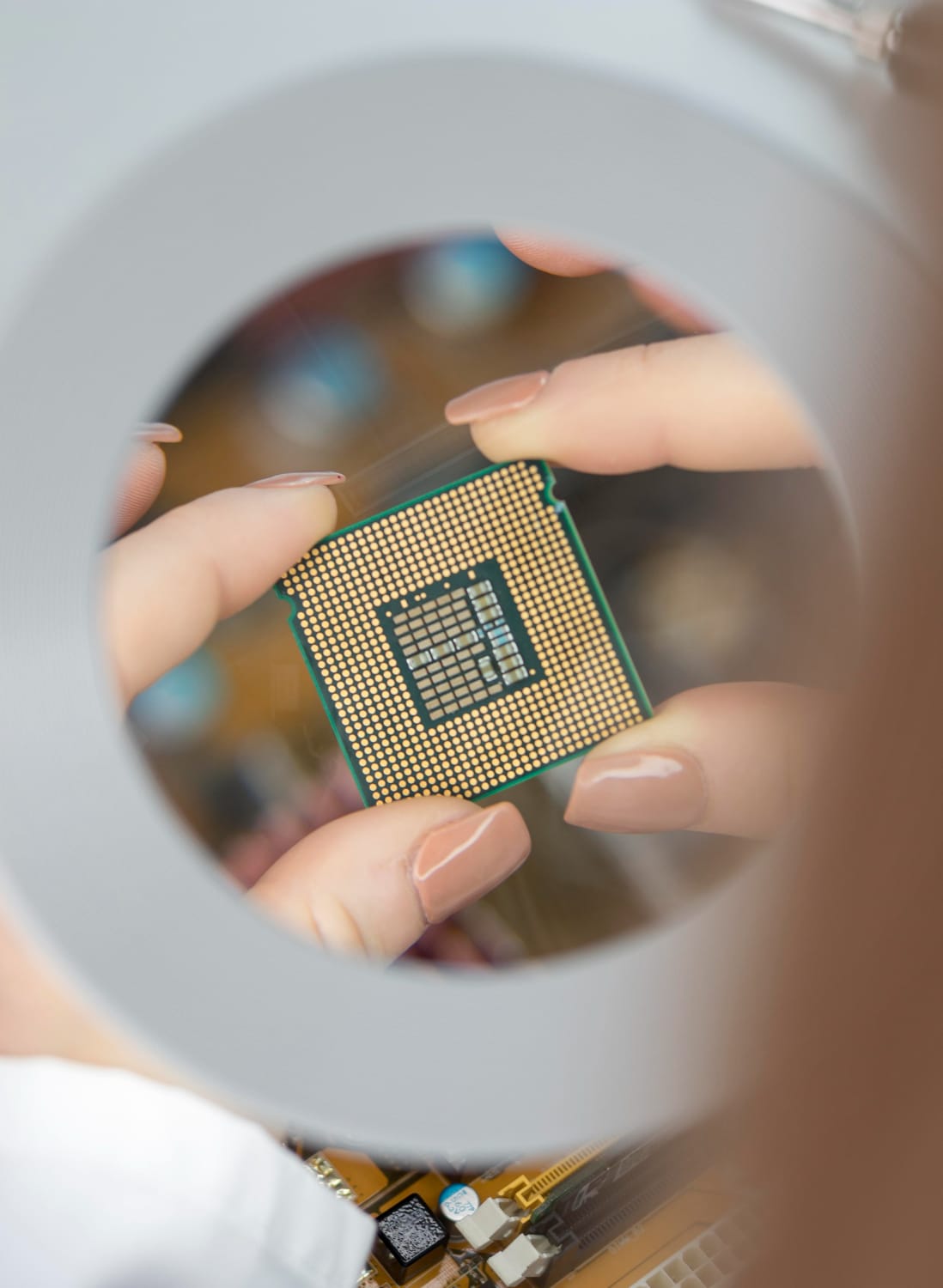

The Asia AI economy growth story goes far beyond consumer apps and AI chatbots. Across the region, governments and companies are building semiconductor factories, data centers, power infrastructure, cloud platforms, and AI talent networks.
That investment gives Asia a unique position in the AI race.
The region does not simply consume artificial intelligence. It increasingly supplies the hardware, infrastructure, and industrial capacity that AI systems require.
As a result, Asia could become one of the most important centers of the global AI economy.
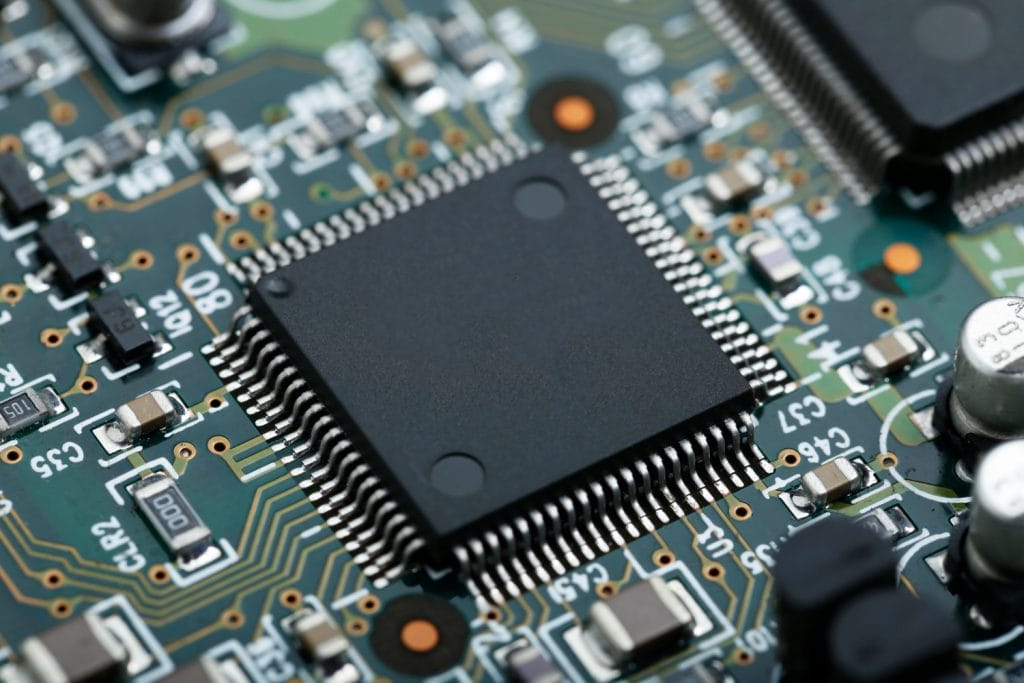
Asia Controls Critical Parts of the AI Supply Chain
AI depends on more than software.
Advanced models require powerful processors, memory chips, networking equipment, cooling systems, electricity, and data centers. Several Asian economies already hold important positions across these industries.
Taiwan plays a critical role in advanced semiconductor manufacturing. South Korea remains a major force in memory chips. Japan supplies important semiconductor materials and manufacturing equipment. Meanwhile, China operates one of the world's largest technology and manufacturing ecosystems.
This concentration gives Asia an advantage.
When global AI companies increase spending, Asian suppliers often benefit before consumers even use the resulting products.
Semiconductor Demand Is Pulling Investment East
The AI boom has created enormous demand for advanced chips.
That demand encourages Asian governments to support domestic semiconductor production. South Korea, for example, has announced plans for a large investment program covering chips and AI data centers. The government also plans to strengthen semiconductor materials, equipment, and fabless companies.
These investments can create a powerful industrial cycle.
More chip factories create demand for equipment and materials. New facilities require construction, electricity, water, logistics, and skilled workers. Those activities then create additional demand across the broader economy.
Therefore, AI can influence Asia even when a company does not directly build an AI product.
Data Centers Are Moving Beyond Traditional Hubs
AI models require enormous amounts of computing power.
Consequently, data center developers increasingly search for locations with reliable electricity, available land, strong networks, and supportive regulations.
Asia offers several attractive options.
CBRE reported that Asia-Pacific data center investment reached a record $11.6 billion in 2025. It also identified Malaysia, Australia, and India as important growth markets as AI demand pushes infrastructure beyond traditional hubs.
This trend could change the region's technology map.
Singapore remains an important digital hub, but developers can also build large facilities in countries with more available land and power.
Malaysia and India have therefore gained attention as AI infrastructure markets.
Southeast Asia Is Becoming More Important
Southeast Asia offers something different from the semiconductor giants of Northeast Asia.
The region combines fast-growing digital markets, expanding manufacturing capacity, young workforces, and increasing foreign investment.
Forrester expects technology spending across several Southeast Asian economies to grow in 2026. Vietnam stands out with projected growth of 15.4%, while the Philippines could reach 12.3%. Malaysia also shows strong growth potential.
These markets can benefit from AI in two ways.
First, companies can use AI to improve existing businesses. Second, foreign technology companies can build infrastructure that supports regional and global demand.
Therefore, Southeast Asia does not need to create the world's largest AI model to benefit from the AI economy.
It can become an important place to run, manufacture, and deploy AI technology.
Singapore Is Turning AI Into an Economic Strategy
Singapore provides a clear example of how governments can approach AI as an economic infrastructure project.
The country has invested in AI research, talent, governance, and computing capacity. Its strategy aims to develop local capabilities while connecting Singapore with international technology networks.
The economic impact has already become visible.
Singapore raised its 2026 growth forecast to 4.5%–5.5% after stronger-than-expected second-quarter growth. The government cited strong global AI investment and demand for AI-related products, particularly semiconductors.
That example shows how AI investment can influence an entire national economy.
India Brings a Different Advantage
India does not dominate advanced chip manufacturing in the same way as Taiwan or South Korea.
Instead, India brings a huge pool of software engineers, technology workers, businesses, and consumers.
That combination gives India another route into the AI economy.
Companies can deploy AI across financial services, healthcare, retail, manufacturing, logistics, and government services. Meanwhile, data localization rules and cloud expansion can encourage more infrastructure investment inside the country.
India could therefore become one of the world's largest markets for applied AI.
Its advantage may come less from producing the most advanced chips and more from turning AI into practical economic activity.
Asia Has the Power Problem Too
AI growth creates an uncomfortable requirement: electricity.
Data centers consume large amounts of power, while semiconductor factories require stable electricity and water supplies.
Therefore, countries cannot expand AI infrastructure simply by building more servers.
They must also expand grids, generation capacity, cooling systems, and transmission networks.
This requirement could create another wave of investment across Asia.
It could also create bottlenecks.
Countries with limited power capacity may struggle to attract the largest AI facilities. Developers will increasingly compare electricity availability alongside labor costs and tax incentives.
Power could therefore become one of the most important competitive advantages in the AI economy.
AI Could Strengthen Asia's Manufacturing Base
Asia already dominates many global manufacturing supply chains.
AI could reinforce that position.
Factories can use AI for quality control, predictive maintenance, robotics, inventory management, and production planning. Manufacturers can also combine AI with advanced robotics to automate increasingly complex tasks.
This creates a feedback loop.
More AI infrastructure supports smarter factories. Smarter factories increase demand for AI hardware and software. That demand then encourages additional investment.
As a result, Asia could develop an AI economy that connects software directly with physical production.
The Region Still Faces Major Risks
Asia's AI opportunity does not guarantee success.
The region faces semiconductor trade restrictions, energy shortages, talent competition, geopolitical tensions, and enormous infrastructure costs.
Financial markets have already shown how quickly AI optimism can change. Foreign investors pulled money from Taiwan and South Korea in July 2026 as concerns about AI spending and chip demand increased.
That warning matters.
Countries and companies can invest too aggressively.
If AI demand grows more slowly than expected, data centers could generate weaker returns. Semiconductor manufacturers could also face excess capacity.
Therefore, Asia must balance ambition with financial discipline.
Asia Could Become AI's Industrial Backbone
The most important shift may not involve which country builds the smartest AI model.
Instead, the bigger question involves who supplies the infrastructure behind those models.
Asia already has many of the required pieces:
- Advanced semiconductor manufacturing
- Memory chip production
- Semiconductor materials and equipment
- Large manufacturing ecosystems
- Expanding data center markets
- Growing digital economies
- Large technology workforces
- Increasing government support
These advantages reinforce one another.
The result could create a regional AI ecosystem that connects research, hardware, infrastructure, manufacturing, and consumer applications.
Final Thoughts
The story of Asia's growing AI economy is not simply about competition with the United States or Europe.
Asia is building a different kind of advantage.
The region can supply critical chips, operate massive data centers, manufacture AI hardware, provide engineering talent, and deploy AI across some of the world's largest consumer and industrial markets.
Recent investment trends already show this transition. Data center investment is expanding across India and Southeast Asia, semiconductor spending remains strong in Northeast Asia, and countries such as Singapore increasingly treat AI as a national economic priority.
That combination could make Asia more than a major AI market.
It could make the region one of the industrial backbones of the AI economy.
And if the AI boom continues, the biggest winners may not always be the companies that build the most famous AI models.
They may be the companies and countries that provide the chips, electricity, factories, networks, and infrastructure that allow those models to exist.